
.svg) Product
Product

.png)




Table of content
ATS Implementation – Best Practices for a Smooth Rollout in 2025
Quick Summary:
5 Core Pillars of ATS Implementation Success
|
ATS implementation determines whether your hiring engine succeeds or stalls — not just the software you choose, but how you roll it out.
Whether you're moving away from spreadsheets or switching from an outdated ATS, one thing is certain: successful ATS implementation takes more than installing software. It needs a clear plan, collaboration across functions, and focus on the end user.
At RippleHire, we've helped enterprises go from chaos to clarity with the right ATS implementation strategy. This blog covers the exact practices we've seen work best across hundreds of ATS implementations — including our own full-suite deployments across IT services, BFSI, pharma, GCCs, and professional services.
Let’s start with the core framework.
5 Rules to Set Your ATS Implementation Up for Success
Before diving into phases and checklists, lock these foundational rules in place:
-
One team, one goal
Don’t split into “client” and “partner” groups. Build one unified implementation team that owns the outcome together. -
Involve real users early
Bring in hiring managers, recruiters, and HR operations leaders—not just IT and HR leadership. -
Simplify workflows where needed
Use this transition to retire old, inefficient steps. The fewer points of conflict, the higher the adoption rate. -
Create a clear roadmap
Define every phase: from discovery and UAT to go-live and post-launch optimization. -
Remember: Go-live is the starting line, not the finish line
Schedule quarterly reviews post-launch to fine-tune your workflows, introduce new features, and reinforce adoption.
10 Best Practices for a Flawless ATS Implementation
1. Start With a Recruitment System Audit
Understand how your current system works—and where it breaks down. Ask:
Are candidates dropping off during interviews?
Is it difficult to track referrals?
Do hiring managers struggle to collaborate?
These insights will guide your priorities during implementation.
Pro tip: RippleHire's built-in benchmarking reports let you baseline your current performance before implementation begins, no manual setup required.
2. Identify Problems, Not Features
It’s tempting to jump straight into features—AI shortlisting, mobile access, or career site branding. But features don’t fix broken processes.
Start by listing issues:
Delayed feedback loops, poor offer-to-join ratio, lack of visibility. Then align features to solve those.
At RippleHire, we call this the “problem-first approach.” It’s how we ensure enterprise rollouts drive adoption from day one.
3. Be Flexible with the Plan
Every implementation hits unexpected turns. Maybe a key stakeholder leaves. Maybe business priorities shift. Or maybe recruiters need more training time.
Build a buffer. Bake flexibility into your timelines. The teams that hit go-live dates consistently are the ones that planned for variance, not the ones that assumed a straight line.
4. Anticipate Risks—And Plan for Them
You’re not just managing tech. You’re managing people, politics, and process change.
Risks to watch for:
Scope creep
Low adoption
Misaligned expectations
Poor data quality
Leadership changes
Mitigation tip: Create a RAID log (Risks, Assumptions, Issues, Dependencies) and review it every week during implementation.
5. Include Advocates from Every Function
Pick 1–2 people from each stakeholder group: recruiters, HRBP, hiring managers, IT—who truly believe in the change.
These are your ATS Champions. They’ll drive awareness, answer questions, and help normalize the transition.
RippleHire implementations always begin with a champion workshop so we can build internal momentum before training even begins.
6. Train Before You Launch
The biggest myth in ATS implementation is "people will figure it out." They won't at least not at the speed your hiring pipeline needs them to.
Train. And train again. Use a mix of formats:
Hands-on sandbox sessions for recruiters
Manager-focused quick-start videos
Role-based walkthroughs
Live Q&A with your implementation partner
RippleHire's embedded walkthroughs and contextual tooltips help reduce ramp-up time dramatically, especially for first-time users.
7. Clean Your Data
Before importing anything, ask: Do we need this?
Assign a team to review and validate historical data. Archive what’s irrelevant. Standardize formats. The cleaner your data, the better your reports, dashboards, and automation outcomes will be.
8. Define Metrics for Success
Don’t wait till the end to measure success. Define KPIs at the start:
Time to offer
Offer-to-join ratio
Recruiter productivity
Candidate NPS
Hiring manager satisfaction
RippleHire gives you real-time dashboards from day one to track progress, flag delays, and report ROI.
9. Nail Your Go-Live Communication
Treat your ATS go-live like a product launch. Send internal teasers. Announce launch dates. Host demos for hiring managers. Record Loom walkthroughs.
When Mphasis launched RippleHire’s ATS, they did a 3-day countdown on Slack, team huddles for recruiters, and even a mock referral drive to test readiness.
10. Plan Post-Go-Live Reviews
The best implementations don’t stop at launch. Schedule feedback sessions every quarter to:
Address issues
Identify low adoption zones
Roll out phase 2 features
Track KPIs against baseline
RippleHire’s Customer Success team runs these checkpoints automatically, helping clients continuously optimize performance.
How to Improve Candidate Experience During ATS Implementation
If your ATS doesn’t improve candidate experience, it’s just a system upgrade not a transformation. Here’s how to avoid that:
Build a Conversion-Optimized Career Page
Your career site is your storefront. Integrate RippleHire’s career site tools to:
Show open roles with smart filters
Embed videos from hiring managers
Capture referrals instantly
Offer job alerts to passive candidates
Explore Career Site Customization →
Automate Communication with Candidates
Use email and WhatsApp touchpoints to:
Acknowledge applications
Share interview prep
Provide timely updates
Send regret emails with feedback
With RippleHire’s communication engine, you can automate all of this without losing the human touch.
Go Mobile-First
Over 65% of applicants use mobile devices.
Ensure your ATS allows:
- Mobile applications in <60 seconds
-
Resume parsing
In-app interview scheduling
Social sharing for referral roles
RippleHire’s mobile-ready workflows let candidates apply and track status from anywhere, without logging into another system.
Use AI to Keep Hiring Moving During Implementation
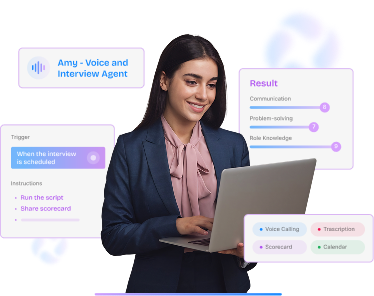
RippleHire's AI Interview Agent, Amy, supports candidates and hiring managers across the full hiring process, from screening and interview preparation to real-time nudges, reminders, and structured feedback capture.
During an ATS rollout when recruiter bandwidth is stretched, Amy keeps the pipeline moving so implementation doesn't stall hiring.
Integrate With Existing Tools
Don’t rip and replace everything.
RippleHire integrates seamlessly with:
HRMS platforms like SAP, Oracle, Darwinbox
Background verification vendors
Job boards and social channels
Onboarding systems
You’ll reduce friction and get a unified view of the hiring funnel.
Wrapping Up
Implementing an ATS isn’t just about deploying a tool. It’s about transforming how your organization hires.
When you get it right, you accelerate hiring, improve candidate experience, and empower recruiters to do more with less.
Planning an ATS implementation or switch in 2026?
RippleHire handles the complexity of enterprise rollouts, ensuring clean data, optimized workflows, and a platform your hiring teams will enjoy using from day one.
Want to see how RippleHire supports enterprise ATS implementation from kickoff to go-live?
Looking to compare your options? Read [The Future of ATS in 2026: 6 Shifts Reshaping How Teams Hire]
FAQs
1. What’s the typical timeline for ATS implementation?
Enterprise rollouts with RippleHire typically take 8–12 weeks from kickoff to go-live, though timelines vary based on scope and integrations.
2. How do we ensure recruiter adoption post-implementation?
Adoption is determined before go-live, not after. Recruiters who are involved in testing, given sandbox time before launch, and trained in role-specific workflows adopt faster than those who receive generic system training on launch day. Embedding a few internal champions from the recruiter team during implementation makes a significant difference.
3. Should we build custom workflows or use pre-configured ones?
Start with pre-configured best practices to save time, and customize only where your business logic genuinely requires it.
4. How do we handle data migration from our existing ATS?Audit your existing data before migration begins. Archive records you no longer need, standardize formats across fields, and validate data quality before import. Poor migration is the most common source of post-go-live issues, since dashboards, reports, and automation all depend on clean underlying data.
5. What happens if key stakeholders change during implementation?
Document decisions, requirements, and agreements in writing throughout — not just at kickoff. A RAID log reviewed weekly keeps the project on track when personnel changes happen, which they often do in enterprise rollouts.
6. Can RippleHire integrate with our existing HR tech stack?Yes. RippleHire integrates with the tools enterprise hiring teams already use, including HRMS platforms like SAP, Oracle, and Darwinbox, background verification providers, job boards, onboarding systems, and assessment tools. This gives recruiters a unified view of the hiring funnel, with candidate data, feedback, and status updates flowing automatically across your stack.