
.svg) Product
Product

.png)


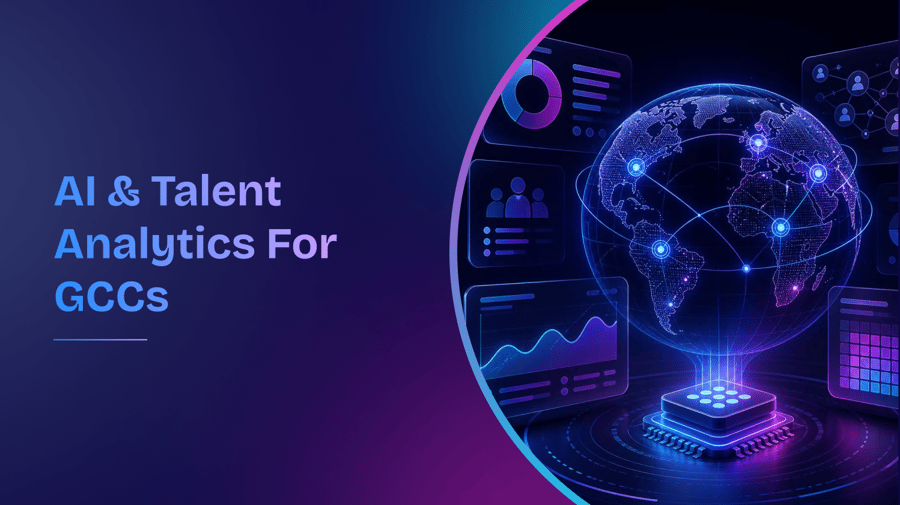


Table of content
Global Capability Centers (GCCs) are no longer just offshore support arms for multinational companies. Initially built and concentrated on cost-effectiveness, these centers have fundamentally evolved into global innovation hubs.
If you are a TA leader in the BFSI or professional services space , you already feel this shift. The focus has moved from cost-arbitrage to capability-building. In fact, recent 2026 market data shows GCCs are leading corporate salary growth (projected at 10.4%) due to sustained global demand and an intense scarcity of specialized digital and AI skills.
Getting top talent onboard and retaining them is integral to GCCs success. But simply adding more recruiters to chase a shrinking pool of niche talent isn't a sustainable strategy. To efficiently conduct talent acquisition operations today, you need to integrate data analytics to make instructional, evidence-based decisions.
Here is a practical look at how Artificial Intelligence (AI) and talent analytics are rewriting the rules of recruitment for GCCs, and how you can implement these strategies to build a future-ready workforce.
The Real Role of AI and Talent Analytics in GCCs
The conversation around AI in hiring has moved past the hype and into operational reality. AI and Talent Analytics are revolutionizing GCCs by leveraging data to make smarter talent decisions.
Instead of relying on gut feeling, AI tools analyze vast amounts of data about employees and potential hires, helping GCCs identify high performers, predict potential risks, and fill skill gaps.
4 Ways AI and Talent Analytics Directly Benefit GCCs
When you deploy AI thoughtfully, it solves very specific bottlenecks in the talent supply chain.
1. Improved Candidate Sourcing
We all know the top of the funnel is noisy. Currently, 52% of talent acquisition leaders state the most difficult part of recruitment is identifying the right people from a large pool of applicants. AI scans tons of data to find candidates with the right skills and cultural fit, actively expanding the talent pool and attracting top talent for GCCs.
2. Enhanced Candidate Experience
Ghosting works both ways, and candidates have little patience for a black-hole hiring process. A staggering 63% of candidates are dissatisfied with a lack of communication from employers after applying for a job. AI-driven chatbots and personalized communication provide timely updates and feedback, improving the candidate experience and strengthening your employer brand.
3. True Data-Driven Decision Making
Talent analytics offer deep insights into your recruitment strategy, enabling GCCs to make wise decisions and consistently improve processes. This isn't a passing trend; 84% of recruiting professionals believe analyzing data to make decisions will become even more usual over the next five years.
4. Predictive Analytics for Resource Planning
Instead of just reacting to hiring managers, AI analyzes past data to predict future hiring needs and trends, aiding GCCs in effective resource planning and allocation. Organizations using predictive analytics are 2.5 times more likely to improve the quality of their hires.
A Step-by-Step Guide to Implementing AI in Your GCC
Bringing AI into a massive, matrixed organization requires structure. Here is a proven implementation roadmap:
Define Objectives and KPIs: Clearly define the KPIs and objectives for implementing AI and talent analytics in recruiting. Know exactly what problem you are trying to solve (e.g., time-to-fill, diversity, or early attrition).
Data Integration: Create a centralized data store for all talent-related information and ensure the seamless integration of quality data. AI is only as good as the data feeding it.
Choose the Right Tools: Opt for AI and Analytics tools that align with your specific requirements and are customizable to your GCC's workflows.
Training and Change Management: Train HR professionals to acquire the maximum output from AI-driven analytics tools for seamless recruiting. Technology adoption fails without human buy-in.
Pilot Testing: Run pilot programs to verify the efficiency of tools and identify the requirements for better results before a global rollout.
Consistent Monitoring and Improvement: Regularly track and adapt the process as required to ensure fairness and mitigate any algorithmic biases.
Future Trends: What TA Leaders Need to Watch
As the talent terrain continues to evolve, AI and talent analytics will be pivotal differentiators for attracting, retaining, and developing top talent. Keep an eye on these three trends:
AI for Diversity and Inclusion: AI technologies can reduce bias in hiring by anonymizing resumes and evaluating individuals based only on their qualifications and skills, which makes for more equitable assessments. This drives the bottom line: businesses with workforce diversity in the top quartile have a 33% higher chance of financially outperforming their less diverse peers.
Advanced Predictive Analytics: As these tools mature, AI identifies quality candidates and future leaders, assisting talent management and reducing turnover. Organizations leveraging this see an upsurge of 20% in the quality of hires and a 25% decrease in employee turnover.
Enhanced Employee Experience: AI improves the employee experience by delivering tailored training, career advice, and feedback. This is critical for retention, as people who report having a positive employee experience have 16 times the engagement level of employees with a negative experience.
The Takeaway: Stop Reacting, Start Predicting
The GCC region stands at a key point in its economic transformation journey. As AI and data analytics persist to reshape industries worldwide, talent acquisition strategies must evolve to keep pace. AI and talent analytics aren't just trends; they're the future of recruitment.
By strategically enforcing these technologies, you can unleash a wealth of data-driven perceptivity to build a future-ready workforce and propel your business success.
Want to share these insights with your delivery leaders and TA teams?
👉 [Download the PDF Guide Here]
About RippleHire
RippleHire is the high-performance AI ATS for global enterprises. We exist to make recruiting effortless, human, and delightful. Our intelligent end-to-end ATS helps you efficiently hire the right talent, enabling you to deliver a best-in-class experience to both recruiters and candidates.
Discover how we help enterprises build a powerful hiring engine at www.ripplehire.com.
Frequently Asked Questions: AI & Talent Analytics in GCCs
Q: What is the role of AI in talent acquisition for GCCs?
A: AI helps Global Capability Centers (GCCs) transition from reactive hiring to data-driven recruitment. By analyzing vast datasets, AI tools can identify high-performing candidates, predict potential risks, and fill niche skill gaps much faster than manual screening.
Q: How does predictive analytics improve recruitment planning?
A: Predictive analytics uses historical hiring and performance data to forecast future talent needs and employee performance. For TA leaders, this means better resource allocation. In fact, organizations that use predictive analytics are 2.5 times more likely to improve their quality of hires and often see up to a 25% decrease in employee turnover.
Q: Can AI actually reduce bias in the hiring process?
A: Yes. AI is a powerful tool for promoting Diversity, Equity, and Inclusion (DEI). By anonymizing resumes during the initial screening phase, AI ensures that candidates are evaluated strictly on their skills and experiences, rather than demographic indicators. Global enterprises like Google and Microsoft actively use AI algorithms to mitigate bias and uncover diverse talent pools.
Q: Why is talent analytics critical for candidate sourcing in 2026?
A: With 52% of TA leaders stating that identifying the right people from large applicant pools is their biggest challenge, manual sourcing is no longer viable. Talent analytics solves this by rapidly scanning data to pinpoint candidates who possess not only the required technical skills but also the right cultural fit for the GCC, effectively expanding the qualified talent pool.
Q: How do AI-driven tools improve the candidate experience?
A: Currently, 63% of candidates express frustration over a lack of communication after applying for a job. AI-driven chatbots and automated, personalized communication workflows eliminate this "black hole" by providing candidates with timely updates and feedback. This drastically improves the candidate experience and protects the employer's brand reputation.