
.svg) Product
Product

.png)





Table of content
Quick Answer Insider threats in BFSI often stem from weak recruitment controls. Traditional background verification (BGV) takes 30–90 days post-hire, leaving institutions exposed to proxy candidates, credential fraud, and system breaches. By deploying Agentic AI within the ATS, financial firms detect identity and resume fraud proactively before offers are issued ensuring speed, security, and DPDP compliance.
Key Takeaways:
- Traditional post-hire BGV takes 30–90 days, leaving BFSI firms exposed to proxy candidates, fake credentials, and insider threats while bad actors have live system access.
- Up to 5% of new hires in high-volume BFSI hiring can be fraudulent without real-time, AI-driven verification controls in place.
- Agentic AI moves fraud detection from post-offer to pre-interview , continuously checking identity, credentials and resumes across the hiring funnel.
The BFSI sector was recently jolted by headlines of a staggering Rs 590-crore financial scandal involving government-linked accounts in an Indian state.
The immediate aftermath was brutal: an estimated Rs 14,300 crore was wiped off investors' wealth in a single day as stock prices plummeted nearly 20%.
But beyond the sheer scale of the stolen funds, the most chilling detail for any banking executive or board member was how it happened.
Early investigations revealed that the fraud was allegedly orchestrated from the inside. Debit instructions were forged, cheques cleared without digital verification, and the foundational "maker-checker" system a dual-control principle designed to prevent fraud completely collapsed.
Why did it collapse?
Because the very employees trusted to uphold these controls were allegedly the ones bypassing them to siphon funds to external shell companies.
When internal controls fail so spectacularly, the corporate conversation usually shifts to operational security, tighter transaction limits, and forensic audits. But this reactive approach misses the root cause : insider threats walk through your front door.
The real question CHROs and Talent Acquisition (TA) leaders must ask is: How much do we really know about the people we are granting system access to?
Claiming that better recruitment software could have prevented a specific, highly orchestrated inside job is unrealistic. However, building an impenetrable defense at the front door is entirely within an organization's control.
In 2026, talent acquisition is no longer just about filling seats; it is about rigorous risk management. As BFSI firms scale especially in high-volume, high-pressure environments the reliance on manual background checks leaves massive vulnerabilities.
Here is why traditional screening is failing the banking sector, the hidden financial math of recruitment fraud, and how deploying agentic AI fraud management systems can help BFSI firms hire safer, verified talent without sacrificing speed.
The BFSI Context in 2026: The Collision of Speed and Security
The reality of hiring in the BFSI sector today is defined by two competing pressures that are pulling in opposite directions.
For the last decade, the CHRO's mandate was focused heavily on "Process Efficiency". However, entering 2026, that mandate has fundamentally shifted to "Financial Resilience".
The days of unlimited hiring budgets are over, and the new normal dictated by the board is "Profitable Growth".
BFSI leaders are currently being asked to drastically increase headcount in revenue-generating roles while keeping TA costs completely flat. This "Efficiency Squeeze" is cited as the primary pressure point for 64% of TA functions today.
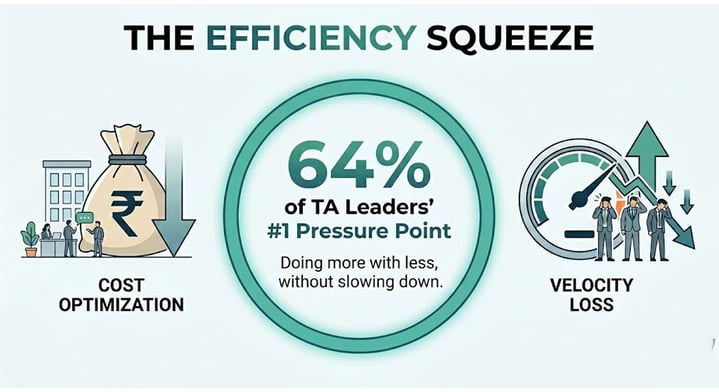
But you cannot solve this squeeze simply by throwing more recruiters at the problem. You can only solve it by removing administrative waste and friction from your existing team's plate.
Simultaneously, the sector is experiencing massive expansion into Tier-2 and Tier-3 cities the "Bharat-scale" hiring challenge. In these emerging markets, candidate behavior is highly volatile.
Candidates apply to multiple jobs simultaneously via mobile devices, and the bank that responds first ultimately wins. For legacy banks, the average "Time-to-Offer" for frontline sales roles sits at a sluggish 14 days, whereas digital-first leaders are closing offers in under 24 hours. Speed is the absolute currency in these regions.
But here is the critical catch: when you accelerate hiring to meet aggressive business demands, security often takes a backseat. If your process takes 14 days, you risk losing top talent to competitors.
But if you rush a hire in 24 hours using fragmented, manual screening processes ,you open the floodgates to fraudulent applicants.
The intense pressure to fill an empty seat which translates directly to lost daily disbursements and severe revenue leakage frequently pushes hiring managers to take dangerous shortcuts.
This creates a highly risky "Shadow HR" environment where managers hire outside the approved system, bypassing critical compliance checks just to get a body in the chair.
The Ugly Math of Recruitment Fraud in BFSI
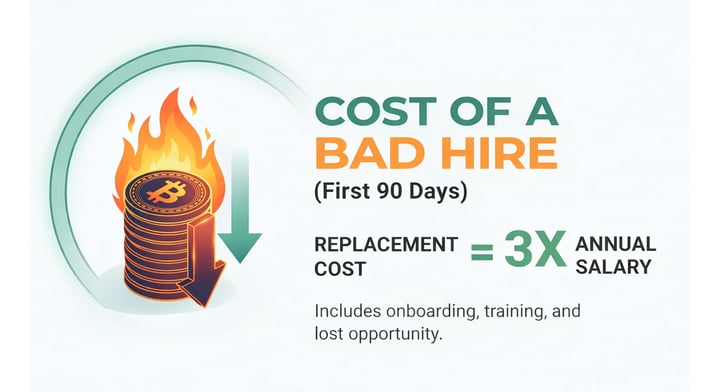
Recruitment fraud is an invisible epidemic costing Indian enterprises crores every single month. We are not just talking about candidates slightly exaggerating their skills on a resume.
We are dealing with sophisticated impersonation rings, fake university degrees, cloned employment histories, and syndicates actively designed to infiltrate corporate networks.
In high-volume enterprise BFSI hiring (e.g., 500 to 1,000 hires per month), internal industry data indicates that up to 5% of new hires could be fraudulent if proper AI-driven checks are not in place.
The financial math of this is horrifying.
| Cost Category | What It Includes | Why It Compounds |
|---|---|---|
| Recruitment and onboarding sunk costs | Recruiting, equipping, and training a fraudulent hire | Replacing a bad hire in the first 90 days costs 3x annual salary in onboarding, training, and lost customer opportunity |
| Compliance sunk costs | Mandatory regulatory background checks, licensing, and compliance training | Investment is 100% wasted when the hire is fraudulent |
| The ghosting tax | 35% offer drop rate | Represents 100% loss of sourcing spend and over 40 hours of wasted recruiter productivity per dropped head |
| Institutional risk | Siphoned funds, regulatory fines, de-empanelment, reputational damage | As seen in the Rs 590 crore case can run into hundreds of crores and permanently damage government business relationships |
Traditionally, BFSI firms rely on third-party Background Verification (BGV) to catch these bad actors. But in the Indian market, BGV is fundamentally flawed because it is almost always post-facto.
Due to the lack of a single reference point for sourcing all information, comprehensive screening gets delayed. Checks are usually initiated after the candidate has accepted the offer, or worse, after they have already joined.
By the time the BGV agency finally flags a major discrepancy regarding a fake employer or a forged document 60 days later, the fraudulent employee is already firmly inside your network, actively accessing sensitive government accounts, client portfolios, or core banking systems.
Traditional BGV vs Agentic AI Fraud Detection: What Actually Changes
The fundamental problem with traditional background verification is not accuracy. It is timing.
| Traditional BGV | Agentic AI Fraud Detection | |
|---|---|---|
| When it runs | After offer acceptance sometimes after Day 1 | During the active hiring funnel -- before any offer |
| What triggers it | Manual recruiter action or HR ops workflow | Automatic, continuous across every candidate at every stage |
| Credential verification | Manual phone calls, email requests, single-source checks | Real-time cross-referencing across education databases, professional registries, employment records |
| Identity verification | One-time document check at onboarding | Continuous biometric baseline established at application, verified at every subsequent stage |
| Impersonation detection | Not designed to detect | Flags inconsistencies across phone screening, video interview, and technical rounds |
| Audit trail | Fragmented across BGV vendor, email threads, and HR files | Complete, immutable, accessible 24/7 for regulatory audit |
| DPDP compliance | Depends on vendor often inconsistent | Consent-first by design, every automated action logged |
| Time to flag | 30 to 90 days after hire decision | During the hiring cycle while there is still time to act |
The difference is not incremental. It is structural.
A fraud flag that arrives 60 days after joining is not a risk management tool. It is an incident report.
Why the Maker-Checker System Needs a Talent Acquisition Pre-Requisite
The recent multi-crore fraud occurred because the "maker-checker" system failed. In banking, the maker-checker concept is a brilliant operational control requiring two independent parties to authorize any significant transaction to prevent unilateral theft.
But it operates on one massive, underlying assumption: that the two individuals are distinct, trustworthy, and rigorously verified employees.
When an ex-employee and a current manager collude to clear forged cheques and manipulate backend banking processes, the system's logic completely breaks.
If the individuals manning the maker-checker posts are inherently compromised, no amount of operational software or transaction limits will save the bank.
This is exactly why defense must start at the front door. We need to shift the paradigm from "trust but verify later" to "verify continuously from day zero."
The Board's mandate for 2026 is crystal clear: the deployment of AI in hiring is no longer an IT decision alone; it is a critical Governance Decision.
Agentic AI: Building the Fortress at the Front Door
Enterprises face rising risks of impersonation and unverifiable credentials. Traditional verification methods manual phone calls to previous managers, email requests to universities, and single-source document checks are easily bypassed by prepared fraudsters.
To combat this, leading BFSI institutions are moving away from manual debt and adopting an "AI-Native Ecosystem". This is where an enterprise ATS equipped with a dedicated fraud management suite changes the hiring posture entirely.
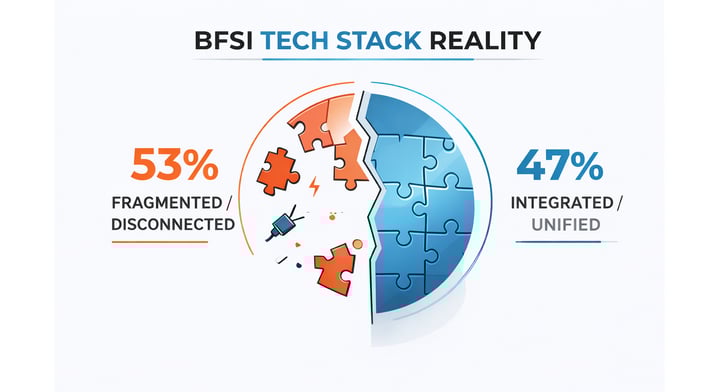
Solutions like RippleHire do not claim to magically prevent operational banking fraud post-hire, but they equip BFSI firms to proactively block bad actors before they ever enter the hiring funnel.
Here is how advanced Agentic AI and continuous verification protect the integrity of the hiring process:
1. AI Impersonation Checks and Continuous Biometric Verification:
In remote hiring environments, proxy interviewing is rampant. A highly skilled individual clears the rigorous technical round, but a completely different, underqualified person shows up on Day 1.
Agentic AI establishes a multi-factor biometric baseline during the initial application stages. With proper consent, it utilizes voice pattern analysis and facial recognition markers in live or recorded interviews.
It verifies identity consistently across phone screenings, video interviews, and technical assessments, immediately flagging if different people appear at different stages of the funnel.
2. AI Parser with Advanced Fraud Detection:
Traditional resume parsers just extract text. A modern AI parser actively hunts for fraud. It detects inflated experience, cloned resumes (where candidates literally copy-paste profiles from legitimate professionals on LinkedIn), and fake certifications.
Instead of a human recruiter spending hours trying to verify a suspicious timeline, the AI cross-references information across multiple databases instantly, spotting inconsistencies in milliseconds.
3. Fake University & Employer Detection:
Fraudsters frequently invent past employers or use known "degree mill" universities that sound legitimate. A high-performance ATS performs auto-validation against trusted, global datasets and blacklists.
It seamlessly navigates education databases, professional registries, and public employment records without human intervention, ensuring the candidate's professional history is objectively real.
4. Immutable Audit Trails and DPDP Compliance:
A major risk in BFSI is the lack of strict auditing. In fact, 45% of firms only audit their hiring process "Annually," meaning a systemic bias or process failure can fester for 11 months before detection.
Advanced systems provide comprehensive, immutable audit trails. Every single decision, from initial screening to final offer rollout, is logged on an immutable ledger. If an auditor needs to see exactly who approved a specific candidate, the data is instantly available.
This makes the bank audit-ready 24/7/365, aligning perfectly with RBI regulatory guardrails and the stringent new DPDP Data Privacy Act mandates.
Under India's DPDP Act, every automated hiring action must be based on candidate-consented data and must generate an auditable record. An agentic AI fraud detection system built on a consent-first architecture satisfies both the efficiency goal and the compliance requirement simultaneously.
Read our DPDP compliance guide for TA teams for the full regulatory picture.
Protecting the Recruiters: Reducing Burnout Without Reducing Standards
While implementing cutting-edge technology is crucial, it is equally vital to recognize the human element in this defense strategy.
Recruiters are the ultimate gatekeepers of your corporate culture, but right now, they are breaking under the load.
Nearly 29% of recruiters handle an unsustainable 41+ requisitions simultaneously. Furthermore, 62% of leaders report massive disruption from AI-spam applications, forcing highly-paid recruiters to spend up to 40% of their day just clicking "Reject" on junk profiles.
You cannot build a high-quality "Service Culture" with a burned-out recruiting team. When recruiters are exhausted and overwhelmed by volume, they miss glaring red flags. They skim over resume discrepancies. They push questionable candidates forward just to meet aggressive monthly SLA targets.
Automation is not about replacing recruiters; it is about rescuing them from the noise. By utilizing purpose-built Enterprise AI to filter out fraudulent and spam applications at the source, recruiters receive real-time fraud alerts.
Hiring managers only see verified candidate profiles, and BGV vendors benefit from enriched, pre-screened data.
This ensures that human experts can focus their energy on deep behavioral assessments, cultural alignment, and relationship building, rather than playing amateur detective.
Conclusion: Hiring at the Speed of Risk
The recent multi-crore fraud in India serves as a stark, unforgiving warning to the entire BFSI sector. A bank's operational security architecture is only ever as strong as the integrity of the individual employees operating it.
When massive funds are siphoned due to compromised internal actors, it becomes painfully clear that talent acquisition is no longer a back-office HR function it is a critical, front-line pillar of enterprise risk management.
Modernizing Talent Acquisition is not an IT cost; it is a vital Revenue Protection Strategy. The CHRO's scorecard for 2026 demands both remarkable Efficiency and unshakeable Resilience.
It requires building a "Ready-to-Deploy" talent engine that entirely eliminates the "Deal-to-Demand" lag, while simultaneously deploying AI that is strictly compliant, highly explainable, and fundamentally trusted by the Board.
We cannot change the fact that bad actors will continuously try to infiltrate financial institutions. However, by leveraging ATS solutions equipped with fraud management, continuous biometric verification, and immutable audit trails, BFSI firms can significantly reduce their probability of success.
Frequently Asked Questions:
What is insider fraud in BFSI and why is it a hiring problem?
Insider fraud in BFSI occurs when employees exploit authorized access to siphon funds or compromise security. It is fundamentally a hiring problem because delayed or inadequate pre-employment screening allows fraudulent candidates using fake credentials, proxy interviewers, or false identities to enter the organization and gain access to sensitive financial systems.
How does recruitment fraud typically manifest in the BFSI sector?
Recruitment fraud in high-volume BFSI hiring usually takes four main forms:
- Proxy Candidates: A skilled proxy takes the video or technical interview on behalf of the actual applicant.
- Credential Fraud: Fabricated university degrees, fake employer certificates, or inflated work experience.
- Resume Cloning: Copying legitimate profiles to pass initial applicant tracking filters.
- Syndicate Infiltration: Coordinated networks attempting to place bad actors into sensitive operational roles.
Why is traditional Background Verification (BGV) insufficient for modern banks?
Traditional BGV fails because it is post-facto running 30 to 90 days after an offer is made or accepted. By the time a discrepancy is flagged by a vendor, the unverified employee already has active access to core banking systems, government-linked accounts, and customer data, leaving the bank highly exposed to insider threats.
What is Agentic AI, and how does it prevent hiring fraud?
Agentic AI is an autonomous intelligence system that proactively detects and blocks fraud during the application process, before an offer is issued. Unlike legacy automation that only parses text, Agentic AI:
- Cross-references claims in real-time against verified education, employment, and legal databases.
- Performs continuous multi-factor biometric checks (facial and voice matching) across interview rounds.
- Automatically flags cloned resumes and blacklisted entity profiles.
Can rigorous AI fraud checks slow down the high-volume hiring required for Tier-2 and Tier-3 cities?
No, AI fraud checks accelerate high-volume hiring rather than slowing it down. Because Agentic AI validates candidate identities, resumes, and credentials invisibly in the background, recruiters can reduce time-to-offer to under 24 hours while simultaneously eliminating fraudulent applicants from the pipeline.