
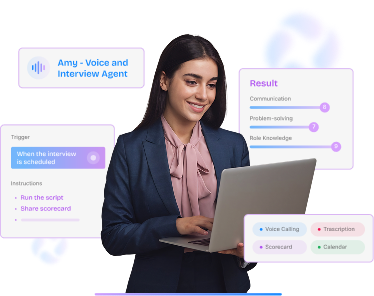
.png)
See how agents can work around your recruiters
We can show you this agent running against your roles, scores and interview stages, so you can see exactly what the agent handles and where your recruiters step in.


.svg) Product
Product Core Modules
Extended Modules
Experience
RippleHire AI
Meet the agents
How the platform works
Responsible AI & Governance
Solution
By Role
By Industry
By Hiring Type
Customers
Core Modules
Extended Modules
Experience
RippleHire AI
Meet the agents
How the platform works
Responsible AI & Governance
Solution
By Role
By Industry
By Hiring Type
Customers Customer Stories
Proof & Community
Resources
Customer Stories
Proof & Community
Resources Download
our Exclusive Ebook
Download
our Exclusive Ebook
Advanced thinking in talent science and culture Actionable frameworks for HR leaders Case studies and results from industry pioneers
Talent science
Comparisons
Company
Talent science
The AI has screened the candidate. The score is available. The next step is clear. Yet someone still has to monitor the report, work out who moves forward, update the stage and tell the candidate what happens next.

.jpg)
That is coordination work, not recruiter work. A candidate who cleared two screens on Monday can still be waiting on Thursday simply because nobody got to the report. By then, they may already be talking to someone else

The agent knows when a voice or video interview has been completed and the result is ready.

Your hiring criteria determine which candidates move forward.

Qualified candidates progress automatically.

The candidate gets the next-step message without the recruiter having to send it.
Configure once. The agent coordinates from there.

The agent watches for completed AI interviews and acts when a result is ready.

Qualified candidates move to the right stage without recruiter intervention.

Recruiters spend more of their day interviewing candidates who have already cleared the initial screen.
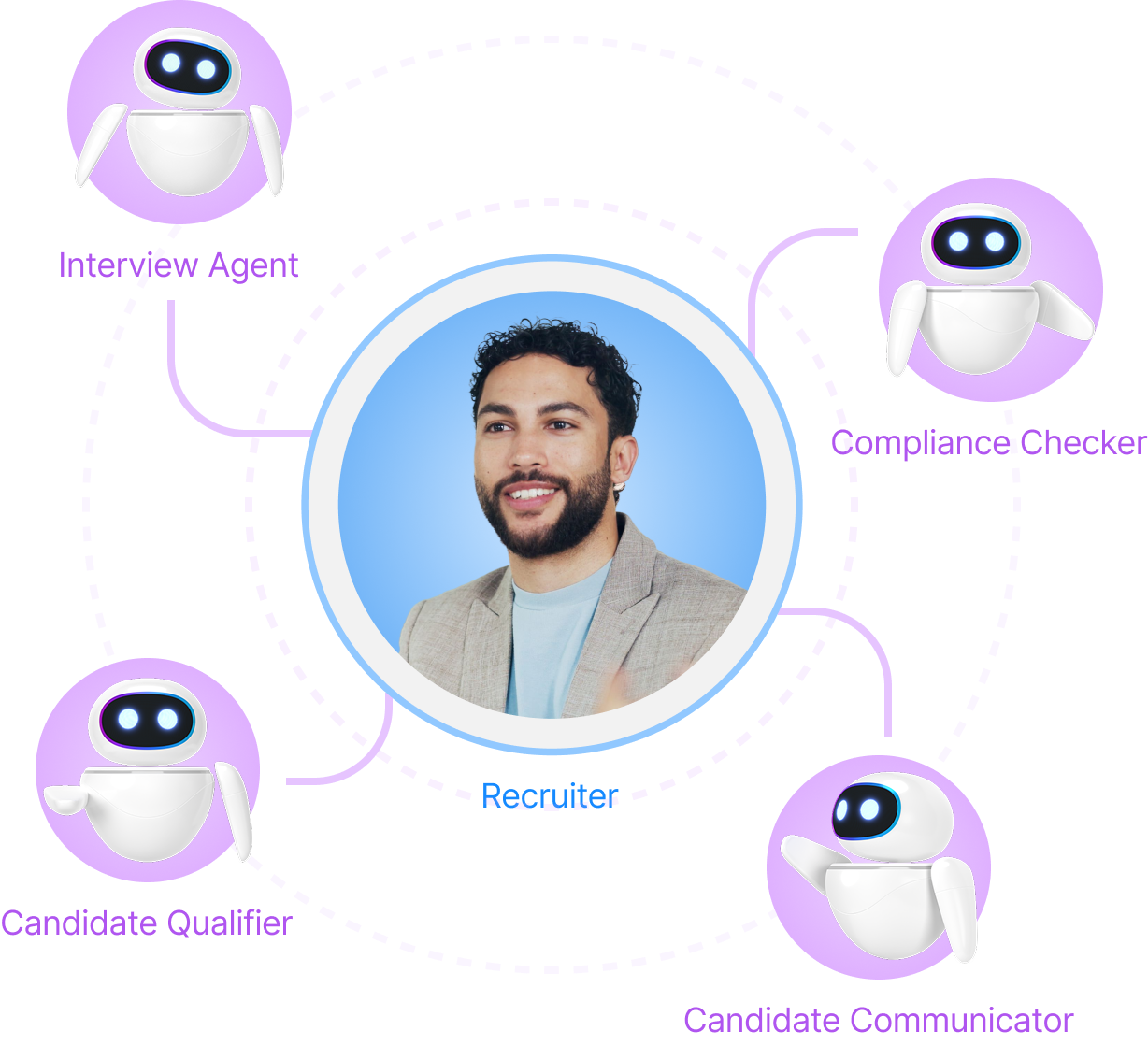
Interview progression is one workflow Agent Builder can coordinate. One agent can launch an AI interview when an application arrives. Another can move qualified candidates forward. Another can enforce a compliance rule before an offer is created. Another can keep candidates informed throughout the hiring process.
The pattern stays the same: agents handle the coordination, while recruiters handle the conversations, decisions and relationships that move hiring forward.
We can show you this agent running against your roles, scores and interview stages, so you can see exactly what the agent handles and where your recruiters step in.