

.png)
See how agents can work around your recruiters
We can show you this agent configured around your approval matrix, salary bands and SLA rules, so you can see which sign-offs it would clear and which would still reach a human.


.svg) Product
Product Core Modules
Extended Modules
Experience
RippleHire AI
Meet the agents
How the platform works
Responsible AI & Governance
Solution
By Role
By Industry
By Hiring Type
Customers
Core Modules
Extended Modules
Experience
RippleHire AI
Meet the agents
How the platform works
Responsible AI & Governance
Solution
By Role
By Industry
By Hiring Type
Customers Customer Stories
Proof & Community
Resources
Customer Stories
Proof & Community
Resources Download
our Exclusive Ebook
Download
our Exclusive Ebook
Advanced thinking in talent science and culture Actionable frameworks for HR leaders Case studies and results from industry pioneers
Talent science
Comparisons
Company
Talent science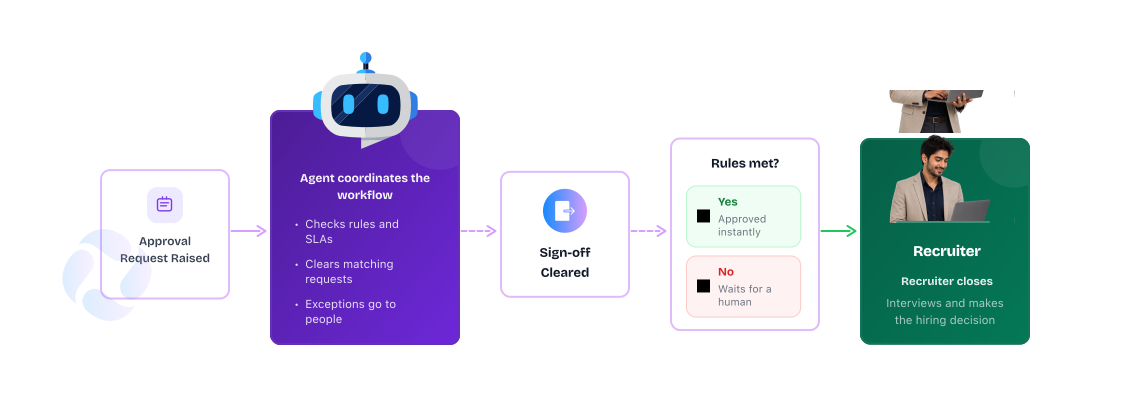
An offer inside the approved salary band. A BGV case with every check clear. A requisition that matches the budgeted plan. The outcome of these approvals is known the moment they are raised, yet each one sits in an inbox waiting for someone to open it.

.jpg)
Chasing those sign-offs across email, chat and reminders is coordination work sitting on a recruiter’s desk. While the request waits, the candidate waits with it. Offers slip, joining dates move, and the delay adds nothing except risk to the hire.

Picks up every pending approval as it is raised.

Checks the request against the rules and SLA conditions you configure.

Approves requests that meet every condition and moves the workflow to its next step.

Takes the approved offer, case or requisition forward without waiting on an inbox.

The agent picks up pending approvals for BGV, offers, requisitions or other sign-offs in your workflow.

Salary bands, budget limits, check results, SLA conditions or any other criteria you define for that approval type.

Requests that meet every condition are approved, and the workflow moves to the next step. Everything else waits for a human.

The requester knows the approval is done, and the next step begins without anyone sending a follow-up.
Configure once. The agent coordinates from there.

Offers, BGV cases and requisitions that meet your conditions clear the moment they qualify, on any day at any hour.

Human attention goes to the requests where judgement changes the outcome, instead of a queue of foregone conclusions.

Offers go out sooner and joining dates hold, because the steps between decision and action no longer sit in a queue.
Approval workflows are one thing Agent Builder can coordinate. Once a requisition clears, Smart Job Distribution opens it with full reach. Zero Ghost Jobs retires it when hiring stops. In between, Human Interview Fast Track and Pipeline Hygiene keep candidates moving.
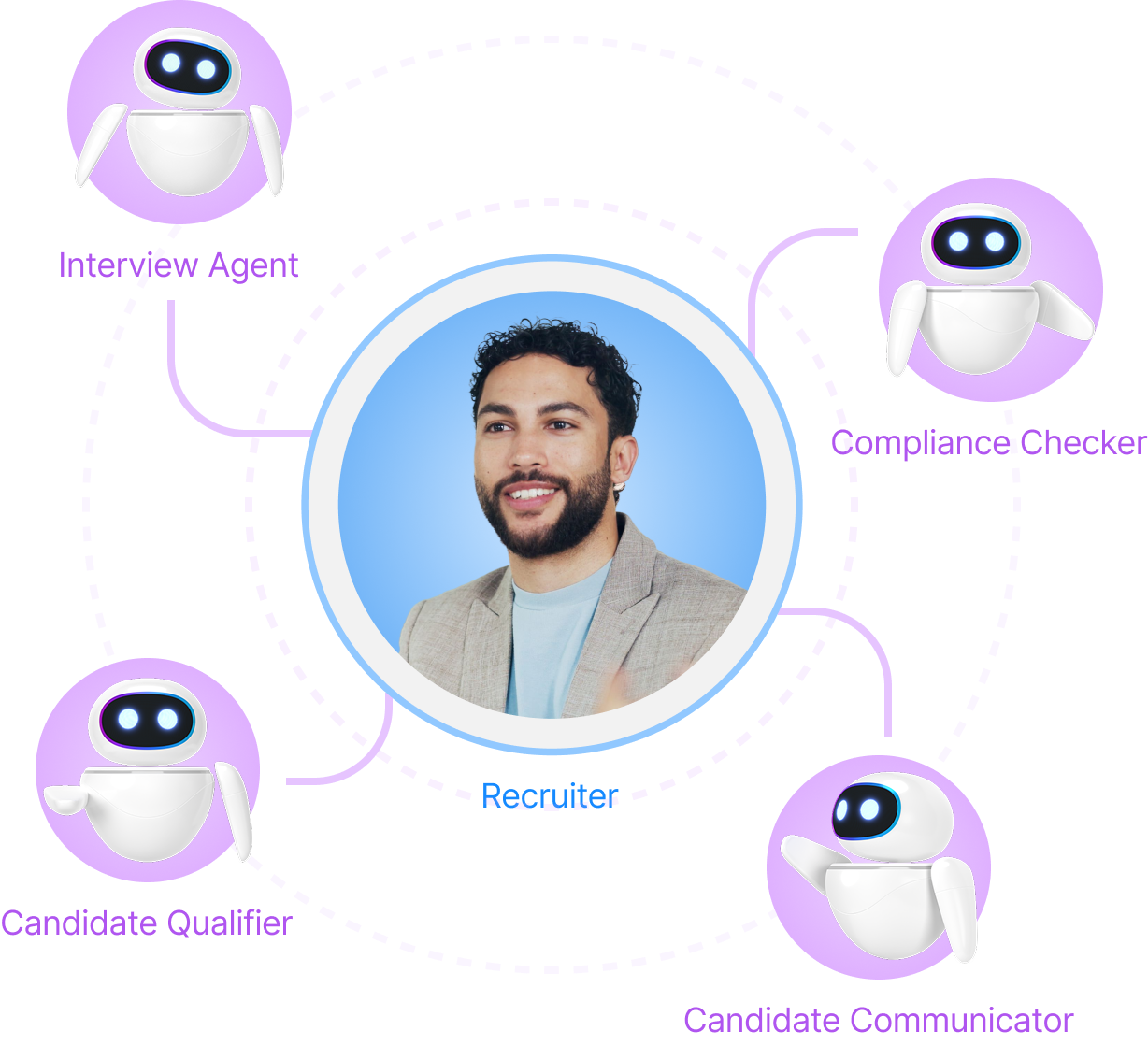
The pattern stays the same: agents handle the coordination, while recruiters handle the conversations, decisions and relationships that move hiring forward.
We can show you this agent configured around your approval matrix, salary bands and SLA rules, so you can see which sign-offs it would clear and which would still reach a human.