
.svg) Product
Product

.png)





Table of content
How to Make Informed Hiring Decisions (And Why It Starts with Recruitment Maturity)
Making informed hiring decisions isn’t just about checking boxes or finding the “best resume.” It’s about whether your organization has the maturity to approach hiring as a strategic function — not a last-minute fix.
At RippleHire, we’ve seen the stark contrast between companies that operate in fire-fighting mode versus those that invest in long-term hiring pipelines. And if there’s one thing we’ve learned, it’s this: informed hiring decisions don’t happen by chance. They happen by design.
Let’s walk through how recruitment maturity influences hiring outcomes — and how you can get better at making the right hiring decisions, consistently.
First, what is Recruitment Maturity?
Recruitment maturity refers to how structured, strategic, and forward-thinking your organization is when it comes to hiring.
Every organization is at a different stage. Some treat hiring like a business-critical process. Others see it as an ad hoc function — something to do when someone resigns.
Most companies fall somewhere in the middle.
We break recruitment maturity into four stages:
The 4 Stages of Recruitment Maturity
Stage 1: Reactive Recruitment
This is where most organizations start.
Jobs open unexpectedly. Skill gaps hit hard. Recruiters post a job description and cross their fingers — also known as the "post and pray" method.
There’s no long-term view, no talent forecasting, and very little process. It's about filling seats quickly, not finding the right fit.
As a result:
-
Candidate experience suffers
-
Teams make rushed decisions
-
Recruiters stay in firefighting mode
If you’re here, you’re likely struggling with high hiring costs and low-quality hires.
Stage 2: Towards Proactive Recruitment
This is when organizations realize that hiring can’t be a reactive scramble.
They start developing proactive strategies — targeting specific candidate pools, improving job descriptions, and collaborating with hiring managers earlier in the process.
You’ll start to see:
-
A defined recruitment process
-
Better candidate engagement
-
Some level of workforce planning
The shift from reactive to proactive starts to reduce inefficiencies and boost hiring velocity.
Stage 3: Building Talent Pipelines
At this stage, recruitment is no longer a support function — it’s tied to business strategy.
You’re not just hiring for today’s roles; you’re investing in talent for tomorrow. Recruiters work closely with employer branding and marketing teams to attract passive talent. Candidate experience becomes a priority.
Organizations here:
-
Nurture long-term relationships with talent
-
Invest in recruitment marketing
-
Plan hiring around business goals
Stage 4: Strategic & Evolved Recruitment
This is where world-class hiring happens.
Talent acquisition is embedded in business strategy. Recruiters act as strategic advisors. Talent pipelines are nurtured year-round. Internal mobility, succession planning, and data-driven hiring become the norm.
You’ll also see:
-
Structured hiring playbooks
-
Advanced recruitment automation
-
Training and upskilling for hiring teams
Most importantly, hiring decisions are informed, consistent, and tied to data — not gut feel.
What Does It Mean to Make Informed Hiring Decisions?
It means moving beyond guesswork.
It means every hiring decision — whether it’s a yes or a no — is backed by data, real interview performance, feedback from multiple stakeholders, and a clear understanding of role requirements.
It also means being able to:
-
Justify hiring decisions with clarity
-
Show a transparent trail of candidate progress
-
Give candidates the information they need to confidently accept an offer
Informed hiring builds trust, reduces hiring mistakes, and strengthens your employer brand.
How to Make More Informed Hiring Decisions
Here are 4 practical tips to help your team make smarter, more confident decisions:
1. Know What You’re Looking For
Before you even post a job, talk to people currently doing the role. Get their input on:
-
Must-have skills
-
Day-to-day challenges
-
Success metrics
-
Cultural fit considerations
Use that to build job descriptions that are clear, realistic, and aligned with team goals.
Don’t chase unicorns. Know what’s non-negotiable and what can be trained. This clarity helps you identify the right candidate faster.
2. Fight Your Biases
We all have biases — it’s how the brain works. But unchecked bias can derail good hiring.
For example, hiring someone just because they “remind you of someone successful” or rejecting a candidate based on name, gender, or academic pedigree isn’t just unfair — it’s risky.
To overcome this:
-
Use structured interviews
-
Involve diverse stakeholders in decisions
-
Evaluate candidates on performance, not perception
RippleHire's platform helps reduce bias by enforcing objective evaluations at every stage.
3. Use Objective Hiring Tools
When you rely solely on intuition, decisions become inconsistent.
Here are 3 tools you can use to bring objectivity into the process:
a. Structured Interviews
Create a consistent interview flow with role-specific questions. Everyone gets evaluated on the same parameters. This builds fairness — and makes comparison easier.
b. Interview Scorecards
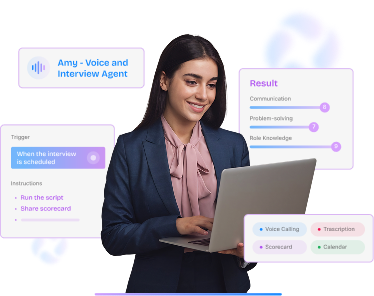
Capture feedback after every interview round using a standardized scorecard. RippleHire lets you define key attributes and auto-compile feedback for better decisions.
c. Skills Assessments
Pre-employment tests are useful for roles that require specific technical or analytical skills. Use these early in the process to avoid wasting interview time on unqualified candidates.
4. Involve the Right People in Final Decisions
While the recruiter or hiring manager may lead the decision, involving others — such as peers, department heads, or even cross-functional team members — helps balance perspectives.
But keep it structured:
-
Limit decision-makers to those who’ve interviewed the candidate
-
Encourage scorecard-based evaluations, not just “gut feel”
-
Review red flags collaboratively
RippleHire’s collaborative hiring workflows make it easy for stakeholders to contribute meaningfully, without slowing down the process.
Why Recruitment Maturity Drives Informed Decisions
Let’s connect the dots.
If your recruitment process is reactive:
-
You’ll rush decisions
-
You’ll skip evaluations
-
You’ll make more hiring mistakes
But if you’re operating at higher maturity:
-
You have clear scorecards
-
You collect structured feedback
-
You enable candidate comparison at scale
-
You use technology to reduce blind spots
That’s what sets high-performing organizations apart — and that’s exactly what RippleHire is designed to support.
Make Better Decisions with RippleHire
RippleHire is the high-performance ATS built for organizations ready to take their hiring seriously.
We help you:
-
Run structured, bias-free interview processes
-
Collaborate across teams without email chaos
-
Automate scorecards, reminders, and candidate communication
-
Collect and act on hiring data at every stage
Whether you’re hiring at scale or building niche teams, RippleHire equips you with the tools to make faster, smarter, and more informed hiring decisions.
Final Thoughts
Making informed hiring decisions isn’t a luxury. It’s a necessity — especially when talent is tight, costs are high, and mis-hires are expensive.
Start by asking where your organization stands on the recruitment maturity curve. Then, use that insight to upgrade your process, tools, and decision-making approach.
Want to see how RippleHire can help you get there?
[Book a demo] and we’ll show you how to bring maturity, structure, and confidence to your hiring process.
FAQs
1. What is an informed hiring decision?
An informed hiring decision is based on structured evaluations, consistent criteria, and input from multiple stakeholders — not just gut feeling.
2. Why is recruitment maturity important for hiring?
Recruitment maturity ensures that your hiring process is aligned with business goals, enables better talent forecasting, and improves decision-making consistency.
3. How can technology improve hiring decisions?
Technology like RippleHire automates scorecards, enforces structure, reduces bias, and gives teams visibility into the entire hiring funnel.
4. What are some objective hiring methods?
Structured interviews, interview scorecards, and skills assessments are all methods to evaluate candidates on merit rather than intuition.
5. How do I know if my organization is making good hiring decisions?
Look at metrics like time-to-hire, quality-of-hire, new hire retention, and candidate feedback. If you’re seeing gaps, it’s time to mature your hiring process.