
.svg) Product
Product

.png)


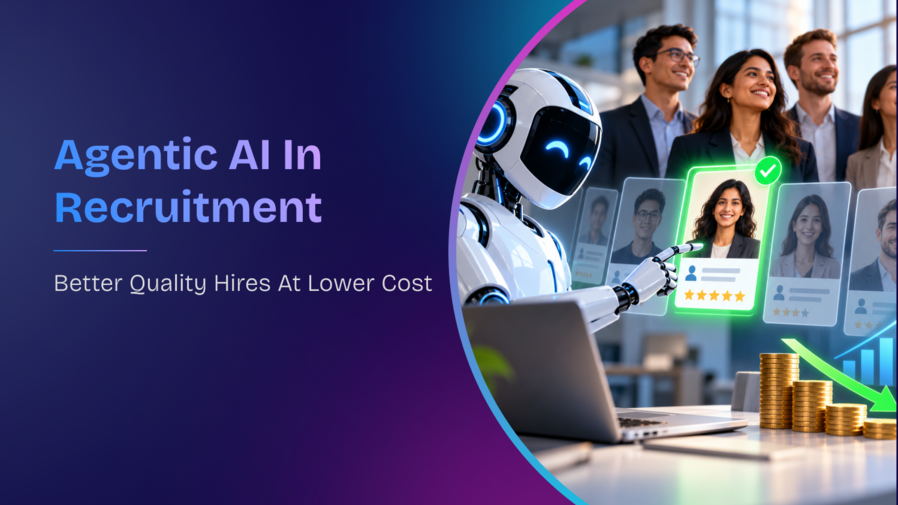


Table of content
Talent sourcing has changed significantly since the days of manually sifting through paper resumes. Most recruiting teams now use AI tools that can scan hundreds of applications in seconds, match keywords against job descriptions, and filter candidates automatically.
But most of today's AI recruitment technology still operates reactively. It responds when a recruiter asks a question, filters when a recruiter runs a search, and stops when the recruiter moves on to something else.
Agentic AI represents a different approach. Instead of handling isolated tasks when prompted, agentic AI coordinates entire sourcing workflows over time, makes decisions about what to do next based on what it finds, and surfaces results for recruiters to review and act on.
This guide covers what makes agentic AI different from standard AI sourcing tools, three specific applications that change what sourcing teams can accomplish at scale, and four pitfalls that determine whether an implementation succeeds or quietly disappoints.
Quick Answer: Agentic AI transforms talent sourcing by building and maintaining candidate pipelines continuously rather than only when a role opens, enhancing existing talent databases with current information rather than letting them go stale, and identifying internal candidates for upskilling rather than defaulting to external searches. In each case, recruiters review the output and make the decisions. Agentic AI handles the coordination work that no sourcing team has the bandwidth to manage manually at scale.
What is Agentic AI and How Does it Different from Standard AI Sourcing Tools?
Standard AI sourcing tools respond to instructions. A recruiter searches for candidates with a specific skill set, the tool filters the database, and the recruiter reviews the results. For each subsequent action, the recruiter issues another instruction.
Agentic AI operates differently. When a sourcing team sets a goal - identify qualified candidates for a senior developer role , agentic AI coordinates the steps required to achieve it without waiting for instruction at each stage.
It can search across multiple job boards, review professional profiles, check candidate qualifications against role requirements, rank the most relevant profiles, and prepare outreach drafts. These steps happen as a connected sequence, with the recruiter reviewing the consolidated output rather than managing each individual action.
The practical difference is where recruiter time goes. Standard AI sourcing tools make each individual sourcing task faster. Agentic AI changes what sourcing teams can accomplish in the same amount of time.
Three capabilities define this shift:
Reach across multiple sources simultaneously
Standard sourcing tools typically check one source at a time. Agentic AI coordinates searches across job boards, professional networks, industry forums, portfolio sites, and academic databases in parallel, bringing results together in one place for recruiter review.
Outreach that reflects each candidate's specific background
Generic outreach messages produce generic response rates. Candidates recognize a template. Agentic AI prepares outreach based on each candidate's specific achievements, the projects they have worked on, and the career progression that makes the role a logical next step. Recruiters review and send. The preparation work is done.
Improvement over time as sourcing patterns accumulate
Standard sourcing strategies remain static until a recruiter manually adjusts them. Agentic AI tracks which candidates progress through the pipeline, what characteristics correlate with successful hires at each role level, and how profiles match with actual team performance. Each hiring cycle informs the next.
For a full explanation of how agentic AI works across the talent acquisition process, read our complete guide to Agentic AI in recruitment.
3 Practical Applications of Agentic AI in Candidate Sourcing
Let's explore some powerful ways agentic AI can transform your sourcing strategy.
1.Building a 24/7 Talent Pipeline
Most enterprise sourcing begins when a role opens. A hiring manager submits a requisition, a recruiter starts a search, and the organization spends weeks or months finding candidates for a need that was foreseeable months in advance.
For hard-to-fill positions, specialist roles, and senior leadership positions, this reactive approach consistently produces the worst outcomes. The organization needs someone immediately. The talent pool has not been built. Every day the role sits open has a real cost.
Agentic AI monitors relevant professional platforms in the background, identifying individuals whose profiles align with the organization's recurring or anticipated hiring needs. It does this without waiting for a requisition to open.
For technology roles, this monitoring might include:
- GitHub contribution patterns to identify developers with specific technical skills
- Conference speaking activity to surface practitioners at the right experience level
- Technical community engagement to find specialists working on relevant problems
For leadership positions, the monitoring might track:
- Career progression patterns that match the organization's leadership profile
- Responsibility expansions at current employers that signal readiness for a move
- Relevant executive education or certification completions
Agentic AI builds comprehensive profiles of potential candidates as it monitors - verified skills, project history, professional growth trajectory and maintains these profiles over time. When a role opens, the sourcing team has a curated list of relevant prospects rather than starting from scratch.
Recruiters review the pipeline, prioritize outreach, and manage the candidate relationships. Agentic AI maintains the infrastructure that makes those conversations possible before the hiring pressure begins.
2.Database Cleanup and Enhancement
Recruitment databases represent significant investment. Sourcing, screening, and evaluating candidates costs time and money. When those candidate records become outdated, that investment effectively disappears.
Most recruitment databases face the same problems over time. Contact information goes stale. Skills records do not reflect recent certifications or career changes. Duplicate profiles accumulate. A candidate who was not quite ready for a role two years ago may now have exactly the experience a current opening requires, but if the database record has not been updated, no one will know to reach out.
Agentic AI works methodically through existing talent databases, applying the same kind of continuous attention that no manual process can maintain at scale.
For data quality, it:
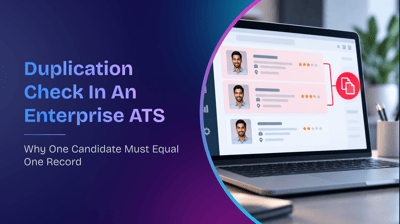
- Identifies and merges duplicate profiles of the same candidate
- Flags contact information that has likely changed based on professional network activity
- Standardizes inconsistent skill tags and job title nomenclature across records
For profile enhancement, it:
- Updates employment history based on publicly available professional information
- Adds certifications and qualifications acquired since the original profile was created
- Notes career progression that may qualify candidates for different roles than those they originally applied for
For pattern identification, it:
- Surfaces candidates whose profiles now match open roles they were not suitable for previously
- Identifies which source organizations tend to produce successful hires at the company
- Flags skill combinations that correlate with strong performance in specific role types
Recruiters review the enhanced database and make decisions about which re-engagement opportunities to pursue. Agentic AI ensures those opportunities are visible rather than buried in stale records.
3.Internal Mobility and Skill Gap Analysis
For most organizations, the default response to an open role is an external search. The internal talent database is checked briefly, if at all, before the external sourcing process begins.
This default is expensive in multiple ways. External hires typically cost significantly more than internal moves when total recruitment cost is calculated. External hires take longer to onboard and reach full productivity. And the employees who could have been considered for internal opportunities receive a clear signal about how the organization views their potential.
The reason internal mobility remains underutilized is not lack of interest. It is that identifying genuine internal matches requires analyzing employee profiles, project histories, and performance data against role requirements -work that no sourcing team has the bandwidth to conduct rigorously for every open position.
Agentic AI creates detailed skill profiles of current employees based on their project history, training records, and role progression. It then maps these profiles against open position requirements, looking beyond exact keyword matches to identify near-match employees.
The value of this approach is in its ability to recognize transferable capability. A marketing specialist with strong data analysis and visualization experience may not have the word "business intelligence" in their profile, but the underlying skills may map closely to a BI analyst role with targeted SQL training. Agentic AI surfaces this match. The hiring manager and talent team decide whether to pursue it.
For roles that have historically been difficult to fill externally, internal identification changes the calculus. An internal candidate who already understands the organization's systems, culture, and context often reaches full productivity faster than an external hire, even accounting for the upskilling investment. The talent team identifies the match. Agentic AI prepares a personalized development pathway. The employee and their manager make the decision about whether to pursue it.
This approach also changes how employees experience the organization. When internal candidates are consistently surfaced and considered for development opportunities before external searches begin, it signals something concrete about how the organization values the people it already has.
Pitfalls to Avoid When Using Agentic AI for Sourcing
Implementing agentic AI in your talent acquisition process offers exciting possibilities, but there are important pitfalls to be aware of. Here are four key challenges to consider before diving in.
Over-reliance on Technology
Agentic AI is built to handle the coordination and pattern-matching work that consumes recruiter time. It is not built to replace the judgment calls that experienced recruiters make about candidates who do not fit standard patterns but have genuine potential.
Many strong hires come from decisions made by recruiters who recognized something beyond what appeared on the profile. Agentic AI surfaces candidates. Recruiters evaluate them, challenge the ranking, and decide who to pursue. The moment the AI output is treated as a decision rather than an input, quality deteriorates.
Relationship-building is the other dimension that stays with the recruiter. Agentic AI can identify promising candidates and prepare personalized outreach. The conversation that makes a candidate genuinely interested in joining the organization typically comes from a meaningful human interaction. That handoff should be deliberate and early.
Data Quality Issues
Agentic AI learns from historical hiring data. If that data reflects patterns the organization would not want to reproduce candidates from certain backgrounds consistently advanced while others were filtered out for reasons unrelated to role performance the AI will learn and apply those patterns.
Before implementation, auditing existing data for:
- Historical hiring patterns that may have introduced unintended bias
- Job requirements that reflect outdated thinking rather than current role needs
- Inconsistent evaluation criteria across different hiring managers or time periods
If the historical data does not reflect current diversity goals or skills priorities, the AI will optimize for what the organization did, not what it wants to do. The audit is not optional.
Privacy and Compliance Concerns
Agentic AI systems often gather and process substantial amounts of candidate data from various sources. This creates potential privacy and compliance risks that need careful management.
In India, the Digital Personal Data Protection Act 2023 places specific requirements on how organizations collect and use personal data. Your AI sourcing system must be configured to:
- Collect only necessary and relevant information
- Maintain appropriate data security measures
- Allow candidates to access their data upon request
- Delete data when it's no longer needed
These are not configuration options to address later. They are requirements that shape how the system should be built and operated from the start. Read our full DPDP compliance guide for TA teams for the complete picture.
Setting Unrealistic Expectations
Agentic AI isn't a magic solution that will immediately solve all your sourcing challenges. Organizations often underestimate the time needed for:
-
Training the system on your specific requirements
-
Integrating with existing recruitment workflows
-
Refining parameters based on early results and recruiter feedback
-
Preparing your team to work effectively with the AI
The most successful implementations start with clear, focused use cases rather than attempting to transform the entire sourcing process at once. Begin with a specific role type or hiring challenge where you have good historical data, then expand as you learn what works for your organization.
Plan for ongoing refinement as you gather feedback from both recruiters and hiring managers about the quality of AI-sourced candidates.
Building your AI Foundation
Before exploring agentic AI for talent sourcing, ensure your recruitment infrastructure can support these advanced tools. A modern, AI-ready Applicant Tracking System serves as the essential foundation for implementing sophisticated sourcing strategies.
RippleHire's High Performance AI ATS provides the ideal starting point with its existing AI capabilities for candidate screening and fraud detection. The AI Profile Recommendation Engine evaluates candidates against role requirements using semantic matching, producing ranked shortlists with the reasoning behind each ranking visible to the recruiter.
Built in Reporting and Analytics gives sourcing teams visibility into which channels produce candidates who progress furthest through the pipeline, which skill profiles correlate with strong performance in specific role types, and where sourcing investment is producing the best quality-adjusted returns.
RippleHire has processed more than 86 million candidate applications across 50 countries. The patterns that inform how its sourcing capabilities work are drawn from real hiring outcomes at scale, not synthetic training data.
Ready to turn your stale talent database into a continuous pipeline of high-quality hires?
Frequently Asked Questions
Do I need to replace my current ATS to use agentic AI for sourcing?
You don't need to replace your current ATS. Most agentic AI sourcing tools can work alongside your existing systems.
However, having a modern ATS like RippleHire with good APIs makes integration much easier. The best approach is to start with AI-ready recruitment software that can grow with your needs as agentic capabilities develop.
What data privacy concerns should we consider with agentic AI sourcing?
When using agentic AI for sourcing, make sure your system complies with regulations like India's Digital Personal Data Protection Act. Only collect necessary information, store it securely, and have clear policies for data deletion.
Be transparent with candidates about how their information is used. Many AI tools now have built-in compliance features to help with these requirements.
Can agentic AI help us build more diverse candidate pools?
Yes, agentic AI can help build more diverse candidate pools by searching beyond traditional talent sources and using objective criteria rather than subjective impressions.
The key is properly configuring the system to focus on skills and potential rather than background. Make sure your implementation team includes diversity experts who can help set parameters that support your inclusion goals.
What makes agentic AI different from regular AI tools for recruiting?
Regular AI tools wait for your commands at each step - like assistants who only work when you tell them what to do next.
Agentic AI works independently like a contractor. Give it a goal like "find five good developers," and it searches job boards, reviews profiles, and ranks candidates on its own without needing instructions for each step.
How do we maintain human connection while using agentic AI for sourcing?
Let AI handle the initial discovery and outreach, but have your recruitment team manage personal connections once candidates show interest.
Be transparent about using AI in your process while emphasizing that key decisions are made by humans. Create clear handoff points where your team takes over communication, especially for interviews and relationship building.