
 Product







Table of content
How To Prevent Reneges And Secure Your Campus Hires
A strong campus drive can still fail if too many candidates back out before joining. Reneges often come down to missed signals and poor follow-through.
In India's IT services and BFSI sectors, campus renege rates during peak placement season run between 20% and 30%, according to industry estimates. For an organization offering 500 campus hires, that translates to 100 to 150 empty seats on joining day each requiring a fresh search mid-year at significantly higher cost.
Campus reneges in India rarely happen because a candidate changed their mind overnight. They happen because something specific changed between offer acceptance and joining day a competing offer, a gap in communication, or an expectation that was never set clearly at the drive.
- A better offer lands during the same placement season students attend multiple drives simultaneously and accept the first reasonable offer while continuing to look
- The role, location, or compensation structure was not explained in enough detail at the drive doubts build during the notice period when the recruiter is no longer in the picture
- The organization went quiet after the offer one confirmation email followed by two months of silence makes a competing offer easier to accept
- A pre-placement offer arrives from an internship host a known manager, a familiar team, and a culture already experienced is harder to walk away from than a campus offer from an organization the student met once
None of these are unsolvable but each needs a different fix.
Track commitment signals early
One of the biggest causes of reneges is not spotting early signs of uncertainty. Candidates might accept your offer at the drive but later cool off often because they’re juggling multiple offers or unclear about their joining date.
Practical ways to track signals:
- Maintain a clear log of post-offer communication how quickly they respond, whether they ask detailed role questions, or if they delay sharing documents.
- Set up periodic check-ins (not just generic “reminder” emails) to keep them engaged and answer concerns directly.
- Use an ATS like RippleHire to flag candidates with delayed responses, missed updates, or unusual patterns in interaction.
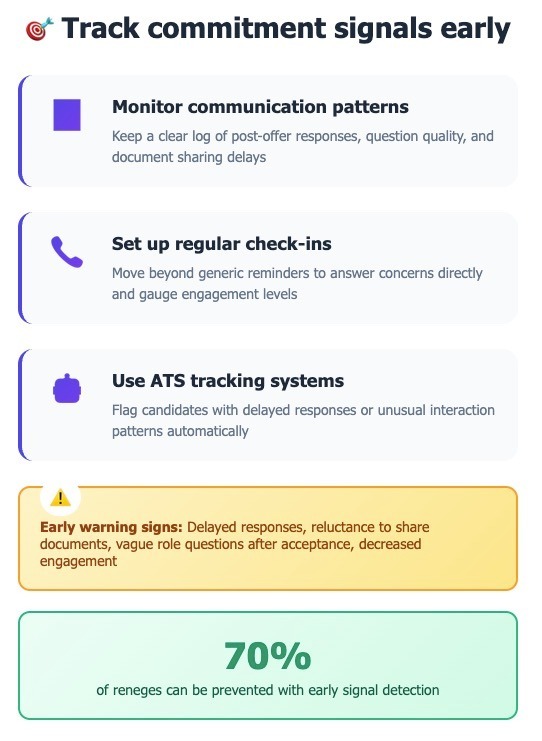
By picking up these cues early, you can prioritize personal outreach for at-risk candidates, clarify doubts, and strengthen their connection with your brand. This not only reduces dropouts but also improves how candidates perceive your responsiveness.
Keep candidates engaged between offer and joining
The months between offer roll-out and joining can make or break your campus hiring outcomes. Many organizations lose candidates here because of a lack of structured engagement.
Instead of sending occasional updates, build a simple engagement calendar:
- Share short, role-related content (day-in-the-life videos, project previews).
- Invite them to closed group webinars with their future managers or peers.
- Provide a clear joining checklist so they know what’s next and when.
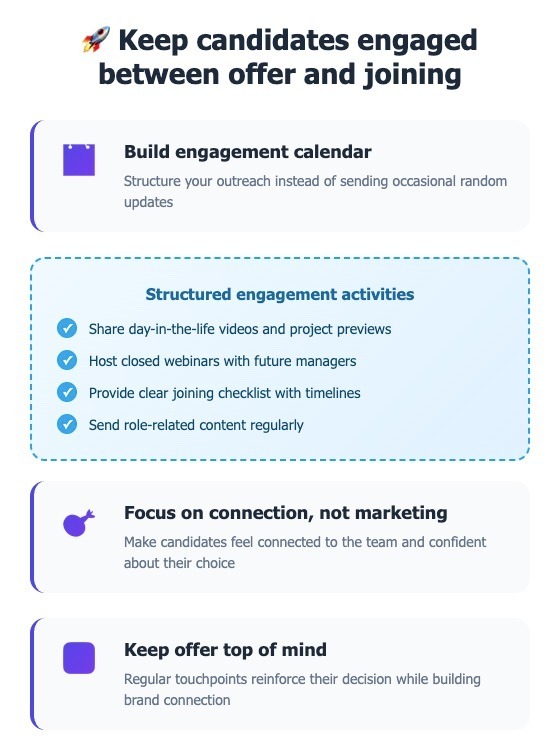
This keeps your offer top of mind while reinforcing their decision to join. Engagement shouldn’t feel like marketing ,it should make candidates feel connected to the team and confident about their choice.
Build offer timelines around academic schedules
Many reneges happen because joining dates or internship periods clash with exams, final projects, or other commitments. If your offer terms don’t fit a candidate’s academic reality, the probability of dropout spikes.
Practical ways to avoid this:
- Map the academic calendars of your target campuses well before the drive.
- Offer flexibility in start dates for high-potential candidates who may have unavoidable schedule conflicts.
- Communicate these options upfront so students don’t feel pressured to choose between academics and your offer.
When you respect a student’s academic commitments, you’re more likely to retain their trust and their acceptance. This also positions your company as considerate and adaptable, qualities that can differentiate you in competitive hiring seasons.
Align compensation and role clarity early
Even the best engagement plans won’t hold a candidate if the offer itself doesn’t match expectations. Mismatches in salary structure, job location, or role scope often surface late right before joining when it’s too late to salvage the hire.
To prevent this:
- Share complete compensation details at the time of the offer, including variable pay components, benefits, and any bond clauses.
- Clearly outline the role’s responsibilities, career path, and possible rotations during the campus presentation, not just in the letter.
- Make sure recruiters and interviewers are aligned so there’s no discrepancy between what’s discussed and what’s offered.
By setting accurate expectations from the start, you remove the element of “offer shock” that can push a candidate toward competitors.
This upfront clarity not only helps you avoid reneges but also builds a reputation on campus as an employer that’s transparent and trustworthy making future hiring seasons easier.
The campus-offer checklist to prevent reneges
Even with the best hiring team, small process gaps can lead to big losses in campus hiring. Having a clear, repeatable checklist keeps every recruiter, hiring manager, and interviewer on the same page. It also makes it easier to measure what’s working and what needs adjustment from one campus season to the next.
How to use it
Treat this as a quick reference you can run through before, during, and after each drive. Adapt it to your own timelines and tools, but keep the core steps consistent this is what helps spot risks early and maintain candidate commitment right through to joining.
The checklist
| Phase | Action |
|---|---|
| Before the drive | Map academic calendars for target campuses |
| Align recruiters and interviewers on role details, compensation, and joining timelines | |
| Prepare communication templates for shortlisted and offered candidates | |
| During the drive | Track interview feedback in real time |
| Roll out offers as close to the drive date as possible | |
| Capture candidate logistics data to plan onboarding and joining | |
| After the drive | Schedule regular engagement touchpoints, role previews, team introductions, and administrative updates |
| Monitor commitment signals and flag at-risk candidates for personalized follow-up | |
| Keep joining documentation and process timelines transparent |
Making it stick
A checklist is about building a predictable process that your whole team trusts.
Review it after each season, refine based on your renege trends, and make it part of every campus hiring playbook. Over time, this discipline becomes one of your strongest defense against last-minute dropouts.
Making campus offer management simpler with RippleHire
Preventing reneges starts with visibility and control. RippleHire’s AI ATS brings your entire campus hiring process candidate logistics, interviewer management, assessments, and offer tracking into one secure platform. You can see real-time updates on each candidate, spot early signs of drop-off, and automate reminders or follow-ups before offers are at risk.
Our AI-powered tools help shortlist the right talent faster, keep candidates engaged with a seamless application experience, and give hiring teams instant access to the data they need to act. Fraud detection and compliance features protect your hiring integrity, while drive automation ensures you can scale without losing track of commitments.
Enterprises in 50+ countries trust RippleHire to run campus drives that convert offers into actual joins. Book a demo today and see how you can make your next campus season your most predictable yet.
See how RippleHire can help you turn more campus offers into confirmed joins book your demo today.
Frequently Asked Questions
What are the early warning signs that a campus hire might renege on their offer?
Watch for delayed responses to communications, reluctance to share required documents, asking vague questions about the role after accepting, and decreased engagement in follow-up conversations.
Candidates who suddenly become less responsive or start asking about policies they previously seemed comfortable with may be reconsidering their decision or comparing your offer with competing opportunities.
How can we keep campus candidates engaged between offer acceptance and joining date?
Create a structured engagement calendar with role-related content like day-in-the-life videos, invite them to webinars with future managers, and provide clear joining checklists so they know what's expected.
This engagement should feel genuine rather than like marketing. The goal is making candidates feel connected to their future team and confident about their decision to join your organization.
Why do academic schedules matter when making campus offers?
Many reneges happen because joining dates clash with exams, final projects, or other academic commitments. If your offer terms don't fit a candidate's academic reality, dropout probability increases significantly.
Map academic calendars of target campuses before drives and offer flexibility in start dates for high-potential candidates with unavoidable schedule conflicts. Communicate these options upfront to reduce pressure.
What role clarity should we provide to prevent campus hire reneges?
Share complete compensation details including variable pay and benefits, clearly outline role responsibilities and career paths, and ensure recruiters and interviewers are aligned on what's being offered.
Mismatches in salary structure, job location, or role scope often surface right before joining. Setting accurate expectations from the start removes "offer shock" that pushes candidates toward competitors.
How do we track and respond to commitment signals from campus hires?
Maintain clear logs of post-offer communication patterns, set up regular check-ins beyond generic reminders, and use tracking systems to flag candidates with unusual interaction patterns.
When you spot early uncertainty signals, prioritize personal outreach for at-risk candidates, address their concerns directly, and strengthen their connection with your brand before they consider other options.
What should be included in a campus offer management checklist?
Before drives: map academic calendars and align teams on role details. During drives: track feedback in real-time and roll out offers quickly. After drives: schedule engagement touchpoints and monitor commitment signals.
Review and refine your checklist after each season based on renege trends. A consistent, repeatable process helps your entire team spot risks early and maintain candidate commitment through joining.