
.svg) Product
Product

.png)


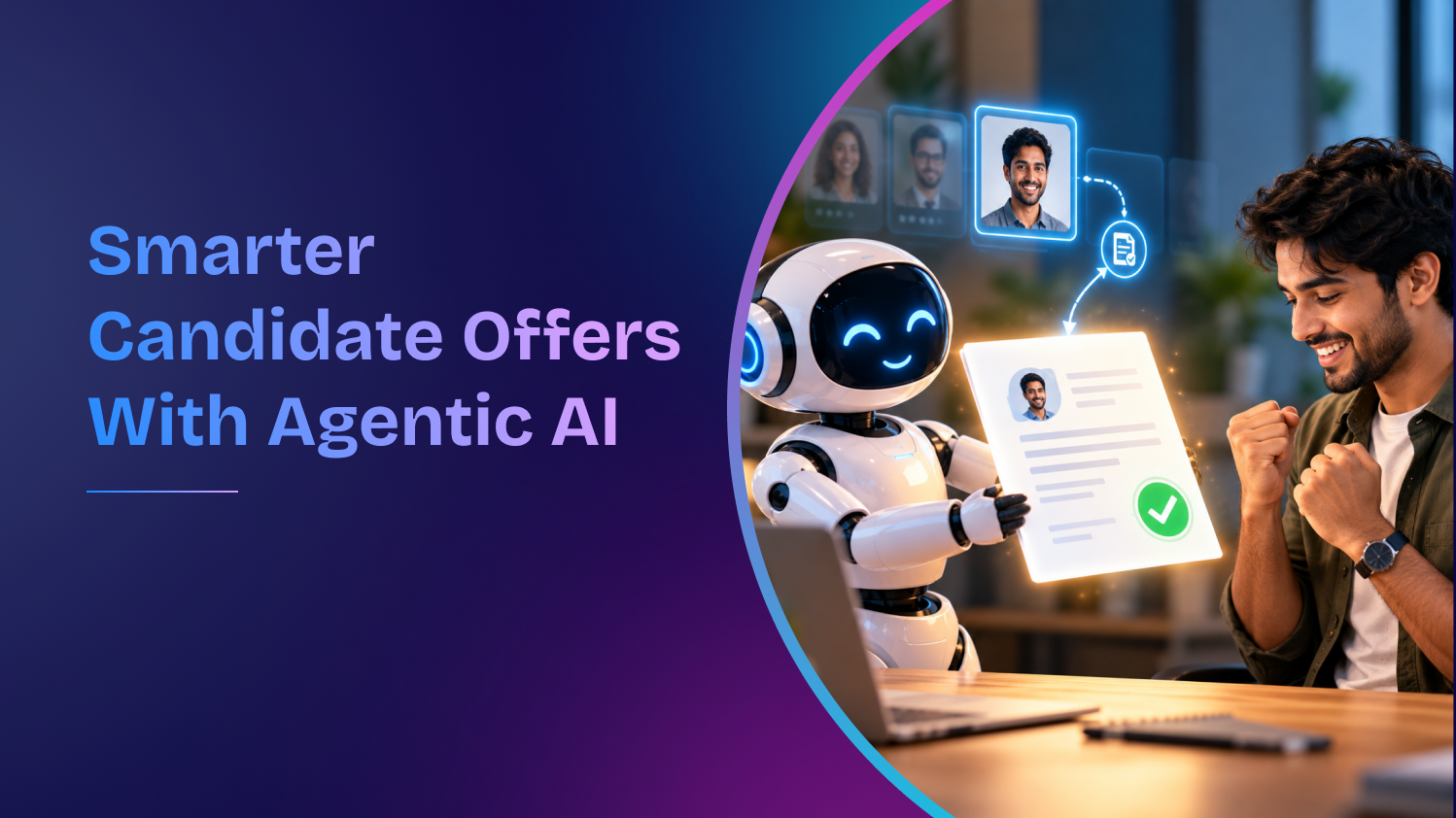


Table of content
The offer stage is where candidate momentum usually stalls.
Weeks of sourcing, screening, and interviewing have led to a decision. Everyone is aligned. The candidate is strong. And then the offer sits in an approval chain for four days while the candidate takes a call from a competitor.
Or the offer goes out as a standard template with no acknowledgment of anything the candidate said during four rounds of interviews.
Most organizations put significant effort into finding the right candidate and almost none into the moment they are asked to say yes.
Agentic AI changes how recruiting teams handle this stage. Not by removing the recruiter from the process, but by handling the coordination, compensation analysis, and personalization work that currently slows offers down and makes them feel generic.
This guide covers three specific ways agentic AI supports the offer stage, and what the recruiting team's role looks like when the coordination work is handled for them.
Quick Answer: Agentic AI supports the candidate offer stage by analyzing compensation data and recommending packages within policy guidelines, personalizing offer communications based on what each candidate expressed interest in during interviews, and tracking offer status to surface follow-up actions for the recruiting team at the right time. Recruiters review, approve, and decide. Agentic AI handles the preparation and coordination work.
What is Agentic AI?
Agentic AI refers to autonomous software that completes complex, multi-step tasks independently to achieve a goal. Unlike traditional automation (which follows rigid scripts) or generative AI (which requires step-by-step prompts), agentic AI evaluates context, coordinates actions across systems, and makes decisions on its own within human-set boundaries.
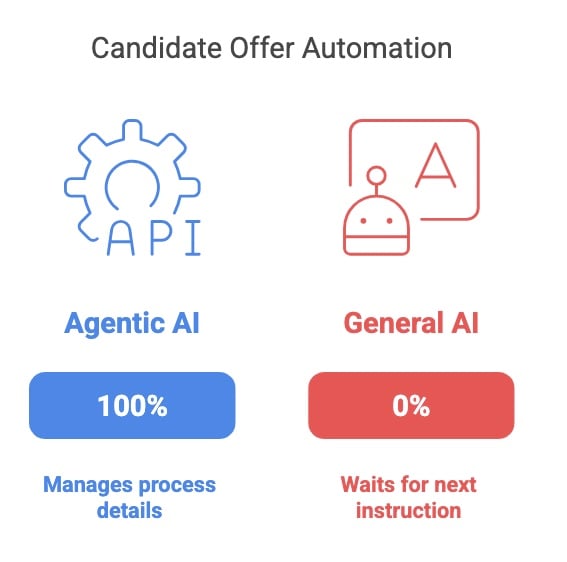 Screenshot
The difference between basic automation, general AI, and agentic AI is most visible in how each handles something like generating and managing a candidate offer:
| Type of automation or AI | What it Does with Candidate Offers | Example |
| Automation | Executes predetermined rules and workflows without deviation. Cannot adapt to exceptions or make decisions. | Automatically sends a standard template offer letter when you click "generate offer" |
| General AI | Creates content, analyzes information, and performs specific tasks when explicitly instructed. Requires human direction for each step. | When asked, drafts an offer letter based on details you provide, but waits for your next instruction |
| Agentic AI | Coordinates end-to-end processes, navigating between systems, making contextual decisions, and adapting to different scenarios while working toward a defined goal. | You tell it: "Prepare an offer for Rahul for the Senior Developer role" and it: 1) Pulls Rahul's details from your ATS, 2) Checks the salary band for the position, 3) Creates a competitive offer package, 4) Routes it to the right approvers, 5) Sends the personalized offer to Rahul once approved, 6) Sets reminders for follow-up, and 7) Updates your hiring dashboard |
With agentic AI, the recruiting team sets the goal and parameters. Agentic AI handles the steps in between, working across your systems while making decisions based on your company policies and the candidate's profile. Recruiters focus on building relationships with top talent while agentic AI manages the process details.
Intelligent Compensation Package Customization through Agentic AI
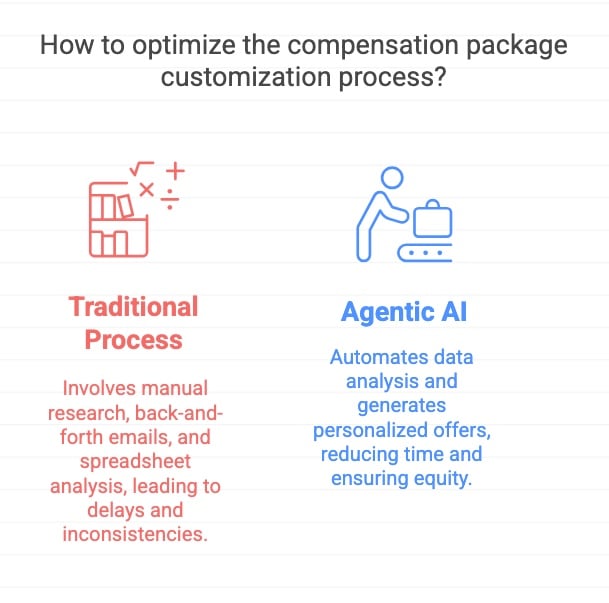
Creating the right offer package for each candidate is often a headache for hiring teams. The traditional process involves:
- Hours spent researching appropriate salary ranges
- Back-and-forth emails between HR, finance, and hiring managers
- Spreadsheet analysis comparing internal and market data
- Delays that risk losing candidates to competitors
- Inconsistencies that can create equity issues within teams
Agentic AI addresses these problems by coordinating the compensation analysis work so the recruiting team can focus on the decision, not the data gathering.
How Agentic AI Supports the Offer Process
When a recruiter initiates the offer process in the ATS, agentic AI:
- Analyzes the candidate's profile, experience, and qualifications
- References internal compensation guidelines and salary bands
- Incorporates market salary data for comparable positions
- Considers geographical compensation factors and cost-of-living adjustments
- Recommends an optimized package that balances competitiveness with internal equity
The recruiter reviews the recommendation and decides what to present. During negotiation, instead of running manual scenarios when a candidate counters, agentic AI models different compensation options within policy guidelines and presents them to the recruiter for review. The recruiter decides which to offer.
Recruiting teams spend less time on calculations and comparisons. That time shifts to communicating with candidates and making the opportunity genuinely compelling.
Bringing the Human Touch Back to Offers with Agentic AI
Recruiters know personalization matters, but with pressure to fill positions quickly, offer letters have become formulaic transactions rather than exciting moments in a candidate's career journey.
When candidates receive generic offers after investing hours in your interview process, it creates cognitive dissonance. They wonder: if the company can't put effort into this critical communication, what does it say about how they'll be valued as employees?
Agentic AI changes this by using what was actually discussed during the hiring process to inform how the offer is communicated.
Unlike basic templating tools, agentic AI analyzes the entire candidate journey, noting what a candidate responded to during interviews and what they asked questions about.
This gives the recruiting team the ability to craft offer communications that speak directly to what matters most to each individual. For example, when Priya receives her offer highlighting the company's women in leadership program she mentioned admiring, it signals that the organization was listening. Or when Vikram's offer emphasizes the cutting-edge tech stack he was excited about, it reinforces why he wanted the role in the first place.
But this isn't just about making candidates feel good. It's strategic.
In competitive talent markets, especially for specialized technical roles abundant across Indian enterprises, these personalized touches can be the difference between acceptance and rejection.
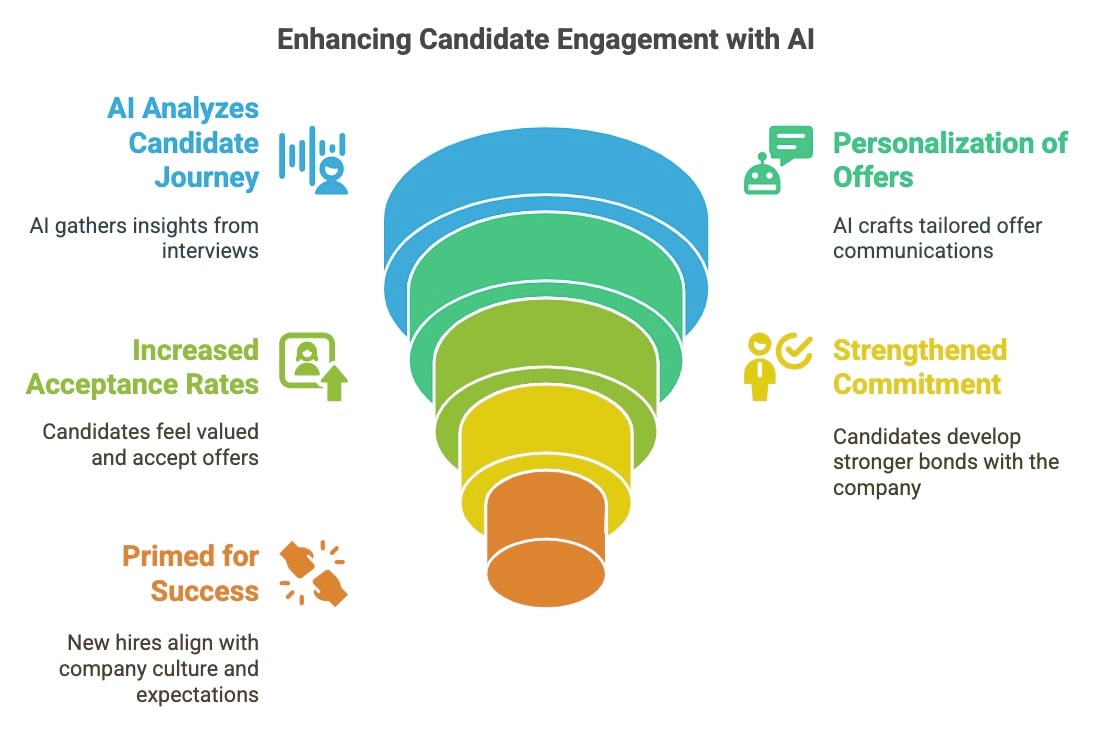
Beyond higher acceptance rates, personalized offers deliver several practical advantages:
They reduce time-to-decision. When offers speak directly to candidate priorities, candidates spend less time deliberating or seeking clarifications. The path to yes is shorter.
They strengthen commitment before joining. By referencing specific conversations and addressing individual concerns, candidates develop stronger connection to the organization before they start, making them less susceptible to counteroffers during the notice period.
They set clearer expectations. When offers highlight aspects of your culture that resonated with the candidate, they arrive on day one with better alignment and fewer surprises.
Agentic AI maintains this level of personalization consistently across hundreds of offers, something even the most dedicated recruiting teams cannot achieve manually at scale.
Tracking Offer Status and Surfacing the Right Actions at the Right Time
The most practical value agentic AI adds to the offer stage is knowing what is happening across all active offers simultaneously, and surfacing the right action for the recruiter at the right moment.
Context-Aware Follow-Up
When a high-priority candidate has not responded to an offer, agentic AI evaluates several signals before surfacing a follow-up action for the recruiter:
- Has the candidate opened the offer?
- What time of day does this candidate typically respond to communications?
- Which communication channel has worked best with this candidate?
- How many days has the offer been open?
Based on this, agentic AI might flag that a personalized WhatsApp message would be more effective than a follow-up email, and propose the message for the recruiter to review and send.
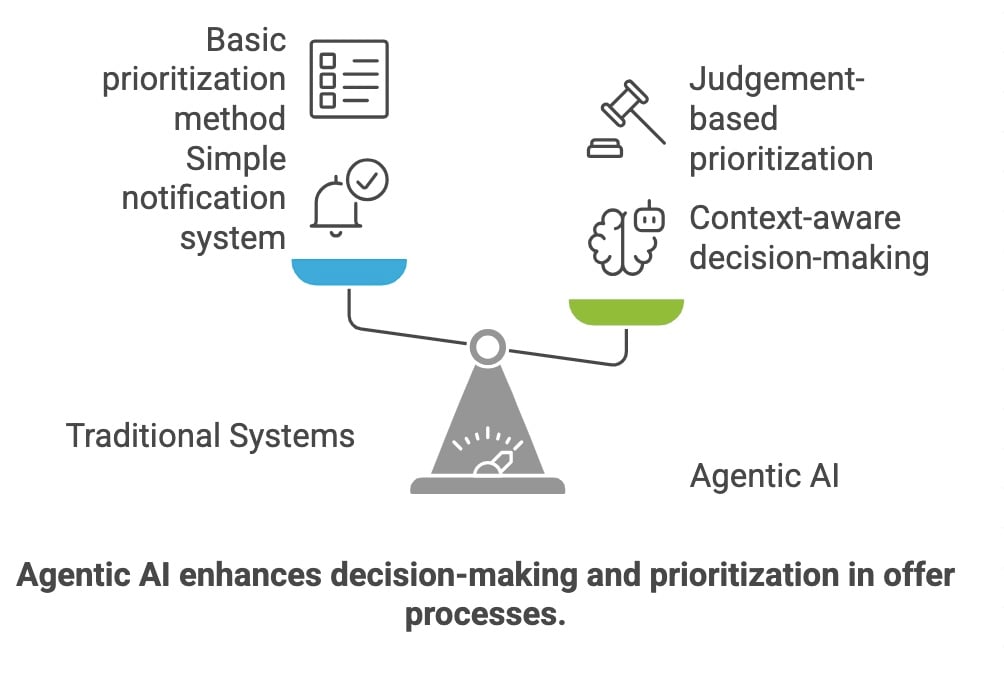
Prioritized Offer Pipeline
Agentic AI continuously evaluates all pending offers and surfaces a prioritized view for the recruiting team:
- A senior engineering candidate who has opened the offer multiple times but not responded may be hesitant and worth a direct call
- A candidate who reviewed compensation details but not the benefits section may need the benefits highlighted
- A candidate who has had the offer for five days with no activity may need a different approach entirely
Recruiters see this view and decide which candidates need their attention and what to do. Agentic AI surfaces the signal. The recruiter makes the call.
When to Handle It vs When to Escalate
Agentic AI also supports the decision of what to manage directly versus what needs a human:
- Routine questions about benefits or start dates can be answered directly from the offer details
- Signs of serious hesitation or unusual requests are flagged for the recruiting team to handle
- Candidate questions that arrive outside business hours are either answered based on the information available or queued for the recruiter with context attached
This keeps the offer process moving without requiring a recruiter to manually monitor every candidate interaction.
Build Your Agentic AI Foundation with RippleHire
RippleHire's Offer Management tools give recruiting teams a structured, trackable offer process that connects directly to the candidate's journey from application through acceptance.
Digital Signatures remove the delay between offer generation and candidate response. Approval workflows route offers to the right stakeholders without manual chasing. The Multi-channel automated outreach keeps candidates updated on WhatsApp or SMS so they do not feel they have fallen into a black hole between interview and offer.
RippleHire's Agentic AI layer connects these capabilities, surfacing the right follow-up actions for the recruiting team based on candidate behavior, compensation guidelines, and offer stage data, so recruiters spend their time on conversations rather than on coordination.
As Ranjeet Garde of LTIMindtree notes, RippleHire's platform "has been seamlessly adopted at every stage of the hiring process," creating the foundation for agentic AI to add value across the full candidate journey.
Ready to turn lost offers into accepted hires?
Schedule a Live Demo to see how Agentic AI speeds up approvals, personalizes offers, and boosts your acceptance rates.
Frequently Asked Questions
Frequently Asked Questions
How is agentic AI different from the automation we already use for offer letters?
Regular automation just follows fixed rules - if X happens, do Y. It can't adapt when situations change or make decisions on its own.
Agentic AI actually thinks through the entire offer process. It can decide which candidates need personalized follow-ups, determine the best time to send communications, and adjust offer packages based on candidate profiles without anyone telling it what to do at each step.
Will agentic AI completely replace recruiters in the offer stage?
No. Agentic AI handles the repetitive parts of offer management like generating documents, tracking responses, and sending reminders. This frees your recruiters to focus on building relationships with candidates.
The technology works best when paired with human expertise. Your team provides strategic guidance while the AI manages process details, creating a better experience for both recruiters and candidates.
What kinds of decisions can agentic AI make about compensation packages?
Agentic AI can analyze a candidate's experience and qualifications against your salary bands and market data to recommend appropriate compensation.
It understands which benefits matter most to different candidates based on their interview feedback and can highlight these in personalized offers. The AI can also model various compensation scenarios during negotiations while ensuring packages remain within your policies.
How does agentic AI personalize offer communications?
The AI analyzes everything it knows about a candidate - from interview notes to their interactions with your company. It identifies what excited them most about the role or company.
Then it crafts communications emphasizing these specific points. If a candidate expressed interest in flexible work options, the AI highlights these benefits. This personalization happens automatically across all your offers, making each candidate feel truly valued.
Do we need to change our current ATS to use agentic AI for offers?
You don't necessarily need to replace your current ATS, but you do need systems that capture structured data throughout the candidate journey.
RippleHire's platform creates the perfect foundation because it digitizes your entire hiring process and integrates with your existing tools. This provides the data environment that agentic AI needs to make smart decisions about offers.
How does agentic AI know when to involve a human recruiter?
The AI recognizes patterns indicating when human involvement would be valuable. It can detect unusual candidate responses, serious hesitation signals, or complex questions beyond its capability.
When these situations arise, it automatically escalates to the appropriate team member while continuing to manage routine aspects of the process. This ensures candidates always get the right level of attention without overwhelming your team.
What happens if a candidate has questions about their offer outside business hours?
With agentic AI, candidates receive immediate responses even at night or on weekends. The AI can answer routine questions about benefits, start dates, or compensation details whenever candidates ask.
For more complex questions, the AI determines whether to provide an immediate answer or set a reminder for your team to respond during business hours. This responsiveness keeps candidates engaged during the critical decision period.
How can agentic AI help improve our offer acceptance rates?
Agentic AI increases acceptance rates by personalizing offers to address what matters most to each candidate. It also provides timely follow-ups at optimal moments rather than letting offers sit without response.
The system analyzes candidate behavior (like how often they review the offer) to identify hesitation and proactively address concerns. This combination of personalization and responsive communication prevents candidates from being lured away by competitors.