
.svg) Product
Product

.png)





Table of content
Quick answer AI candidate sourcing is the use of artificial intelligence to find, identify, and engage potential candidates especially passive talent not actively applying before they enter a formal hiring pipeline. It searches large sets of candidate profiles, matches people on skills and career signals rather than job titles, and automates personalized outreach at a scale.
Somewhere between "AI screens resumes" and "AI finds you the perfect candidate" is what AI sourcing actually does. It is less magical than the second and more useful than the first.
This guide covers what it actually involves, where the results are real, and where a person still needs to be in the room.
How AI sourcing works
AI sourcing tools handle three main tasks that recruiters just cannot keep up at scale:
High-volume data scanning
AI searches profiles across LinkedIn, GitHub, professional forums, and simultaneously surfaces candidates across a much wider field than a recruiter checking one platform at a time.
Skill and trajectory alignment
AI analyzes skill relevance from job history, project contributions, and career progression, which means it surfaces candidates who have the relevant experience instead of relying strictly on exact keywords of the job description.
Candidate openness signals
AI continuously tracks profile updates, new certifications, and career patterns to spot passive talent open to a move, that recruiters cannot manually track.
Where AI sourcing delivers real results
High-volume roles
AI sourcing can build and maintain a warm pipeline automatically tracking candidates, who were close fits in previous rounds, flagging when passive candidates in the pool show renewed activity, and surfacing new matches as they emerge. Recruiter managing this manually spend most of their time on data maintenance rather than conversations.
Specialist and niche hiring
For niche roles where fewer than 5% of the right candidates are actively looking, reaching them requires proactive outreach. AI scans public signals forum contributions, open-source project activity, conference speaker history ,surface people ,a recruiter would not be able to find through a job board search.
Initial screening
Recruiters spend a significant portion of their week on initial resume review. AI-assisted screening pre-sorts applications by relevance before a recruiter opens a single profile reclaims that time. A CIPD report found that 66% of organizations using AI in recruitment said it improved hiring efficiency ,the largest gains came from reducing manual triage time.
Existing talent pools
Past applicants, employee referral candidates who were not hired, and silver medallists from previous rounds represent a pre-qualified pool that most ATS systems store but never use. AI surfaces relevant profiles from these existing records when a new role opens reduce sourcing cost significantly.
7 High-impact AI sourcing strategies
1. Predictive talent pipelines
Predictive analytics identifies hiring needs 30-90 days before a role opens by analyzing past hiring patterns, project roadmaps, and seasonal demand.
UST built this into the sourcing process structurally. Integration with UST's workforce planning system ensured recruiters only acted on demands that had already been approved for external hiring, so sourcing effort was never spent on roles that would be filled internally or cancelled.
Vendors and employees submitted referrals directly into the platform, where duplicate checks ensured source attribution was accurate from the first touchpoint. The demand signal triggered the sourcing action.
The result is not just speed, it is the difference between sourcing under pressure and sourcing with time to be selective.
2. Skills-based matching
Skills-based AI evaluates real capabilities over generic job titles, discovering qualified talent even when profiles use non-standard terms.
In technical fields like data engineering, cloud architecture, or embedded systems, talent pools rarely use the exact same title.
For example, a candidate listed as a "Backend Developer" might actually spend 90% of their time building data pipelines ,a perfect match for a Data Engineer role. By analyzing project histories and core skill sets rather than exact phrasing, AI uncovers these hidden gems that traditional keyword searches routinely skip.
3. Passive candidate engagement
Around 70% of the global workforce is passive not actively applying to jobs but potentially open to the right conversation. Reaching them requires identifying signals that indicate openness before direct outreach.
AI monitors public signals like profile updates, certifications, and forum posts to flag passive talent who are receptive to outreach.
This makes the outreach better targeted so recruiters spend time on the candidates most likely to respond, not a random sample of profiles.
4. Job description optimization
The job description is the first filter in any sourcing strategy it determines which candidates self-select to apply and which scroll past. AI analyzes historical application data to uncover which job details help or hurt your hiring funnel.
For instance, demanding "10+ years of experience" might scare off top-tier talent who have the exact skill set in just six. AI flags these overly rigid requirements, spots biased language that drives candidates away, and recommends phrasing proven to boost qualified applicant conversions.
5. Personalized outreach at scale
Generic outreach gets ignored because candidates know when a recruiter has not read their profile.
AI automatically pulls specific details like recent certifications, key open-source contributions, or specialized project work to draft personalized messages at scale. Instead of spending hours writing a handful of emails, recruiters can send multiple thoughtful, highly relevant messages that drive significantly higher response rates.
6.Top-of-funnel bias reduction
AI sourcing does not fix bias on its own, but blind screening ensures every candidate is evaluated on fair, consistent criteria right from the start.
Blind screening removes names, photos, and demographic details from initial candidate summaries. This allows the system to evaluate applicants purely on their skills and relevant experience, creating a more balanced shortlist before recruiters step in.
7. Unified ATS integration
Sourcing data is only useful if it's easy to access. Without direct ATS integration, candidates sourced by AI end up trapped in a separate tool that recruiters rarely check. Connecting AI sourcing directly to your ATS turns single-use candidate lists into an active, long-term talent pipeline.
While 91% of companies expect AI to boost productivity, those gains only happen when tools work inside your existing workflow. Automatic imports and tracked engagement ensure candidate profiles stay updated and easy to surface the moment a new role opens.
Axis Securities unified sourcing across agencies, job portals, referrals, and internal postings into a single pipeline with automated deduplication and smart screening rules. Centralizing these channels gave recruiters a single view of all applicants. This made it easy to track top-performing sources, eliminate duplicate reviews, and surface quality candidates faster without managing chaotic, fragmented lists.
Where AI sourcing still needs human judgment
Highly contextual roles
A Chief of Staff position at a Series B startup requires judgment about organizational culture, founder working style, and the candidate's ability to operate with ambiguity. AI can surface candidates with relevant experience. It cannot assess fit for a context it cannot read.
Roles where the brief is itself unclear
If a hiring manager cannot articulate what a successful hire looks like in six months, AI matching has no signal to match against. The tool surfaces candidates who look like previous hires in similar roles which may or may not be what the organization actually needs.
Over-reliance on inferred signal
AI works on inferred signal what a candidate's profile suggests about their capabilities. This is useful for building a first shortlist. It is insufficient for a hiring decision. The strongest enterprise sourcing operations pair AI-inferred signal with measured signal ,structured assessments and structured interviews that confirm whether the candidate's actual capabilities match what the profile suggested.
Key Ethical and legal standards
Data consent
Under India's Digital Personal Data Protection Act 2023, explicit consent is required before personal data is collected and processed for hiring purposes.
Bias in training data
AI models learn from past hiring decisions, which means they can repeat old biases like preferring candidates from specific colleges. Run regular diversity audits on candidate shortlists, this helps your team spot these patterns early and ensure fair, balanced hiring.
Process transparency
Candidates expect transparency about AI in hiring. Being open about AI's role builds trust and protects your employer brand and creates a positive candidate experience.
How RippleHire approaches AI sourcing
These sourcing strategies work best when the coordination work does not fall on the recruiter. Following up with passive candidates, scheduling screening calls, tracking which channels are producing quality shortlists, the real tasks that consume recruiter's time.
That is where RippleHire comes in. It is the AI ATS where recruiters and agents work together ,agents handle the scheduling, screening, and follow-ups so recruiters spend their time on the conversations that actually close hires.
Agent Builder lets teams configure how agents work without needing IT involvement.
AI Profile Recommendation Engine surfaces internal and external candidates the moment a role opens.
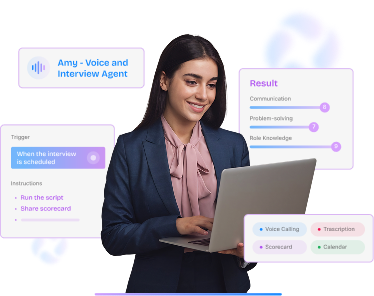
Amy runs first-round screening at scale. AI Voice Agent handles outreach and qualification calls keeping candidate engagement active without requiring recruiter time for every touchpoint.
Enterprise teams across 50+ countries use RippleHire to run compliant, high-volume hiring with real-time dashboards and structured interviewing frameworks built into the process.
If you are ready to see how it works with your own roles and hiring scenarios, request a demo and bring your team.
Frequently Asked Questions
What is AI candidate sourcing?
AI candidate sourcing is the use of artificial intelligence to find and engage potential candidates, particularly passive talent . It searches large candidate datasets, matches profiles on skills and career trajectory rather than keywords, and automates personalized outreach at volume. It is different from AI screening, which evaluates candidates after they have entered the process.
How does AI find passive candidates?
AI sourcing tools monitor public signals that indicate a candidate may be open to new opportunities : recent profile updates, new certification activity, changes in posting frequency, forum contributions. These signals do not confirm interest, but they identify candidates more likely to respond to outreach than those showing no recent activity.
Does AI sourcing reduce bias in hiring?
It can, but not automatically. When configured to filter on skills and experience while suppressing demographic indicators, AI sourcing applies consistent criteria to every candidate without the variation that individual recruiter judgment introduces.
What does AI sourcing not replace?
AI sourcing does not replace judgment on contextual fit, assessment of candidates for roles where the requirements are ambiguous, or the relationship-building that converts an initial message into a genuine conversation. It handles volume and pattern recognition. Humans handle nuance, context, and relationship.